
Why Protein Matters for Toddlers
Protein foods for toddlers get a ton of hype right now (hello, "high protein toddler snacks" all over your feed), so I wanted to break down what your toddler actually needs, without the fear or the pressure.
Protein supports muscle growth, brain development, immune function, and tissue repair, basically it's a building block for pretty much every part of your toddler's rapidly growing body. It also helps keep them fuller between meals, which can mean fewer meltdowns before snack time (we love that for us).
I often hear so many parents worrying that their toddler isn't getting enough protein, but here's the good news: most toddlers meet their protein needs through regular meals without you doing anything extra, even the picky ones! A study on preschool picky eaters did find that pickier kids took in less protein on average than non-picky eaters, but a separate review of the research found picky eaters generally still hit their nutrient needs, protein included, because the recommended amounts for little ones are genuinely pretty small.
As a pediatric dietitian and mom, I wanted to put together a realistic protein foods for toddlers list, actual serving sizes, easy meal ideas, and answer the "does my toddler need a protein shake" question once and for all. And of course, if you have more questions after reading through this, then you can totally schedule a consult call with me!
How Much Protein Does a Toddler Need?
According to the National Institutes of Health Dietary Reference Intakes and the American Academy of Pediatrics:
- Ages 1-3: ~13 grams per day (or 1.05 g/kg of body weight/day)
- Ages 4-8: ~19 grams per day (or 0.95 g/kg of body weight/day)
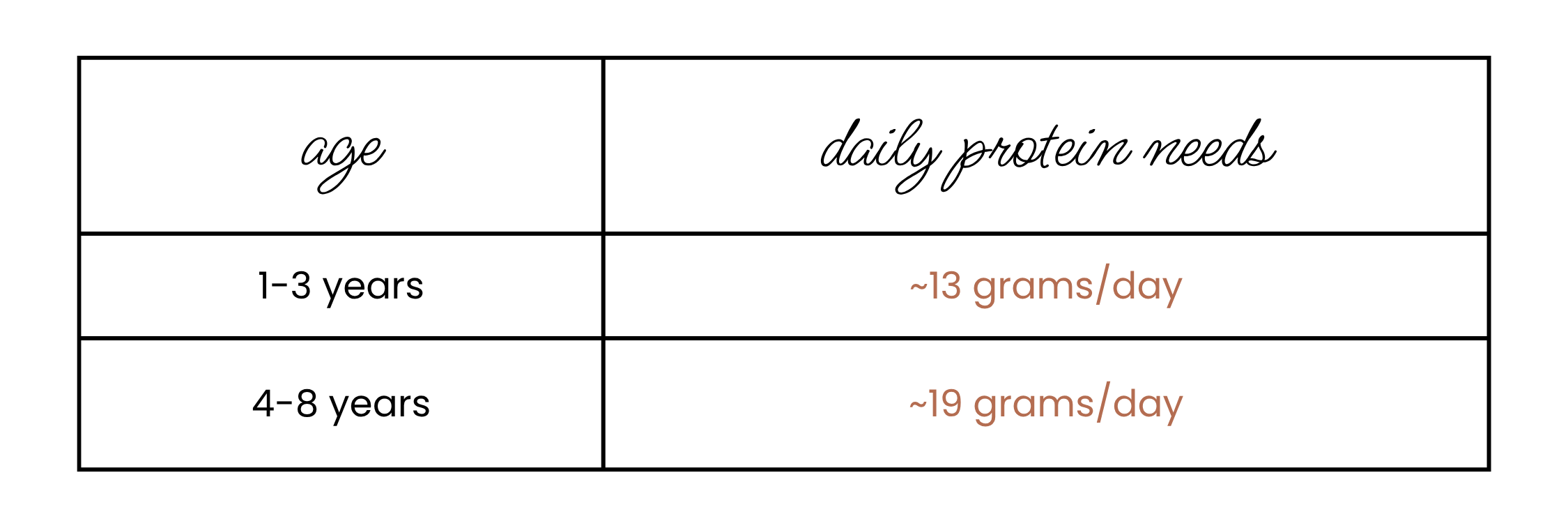
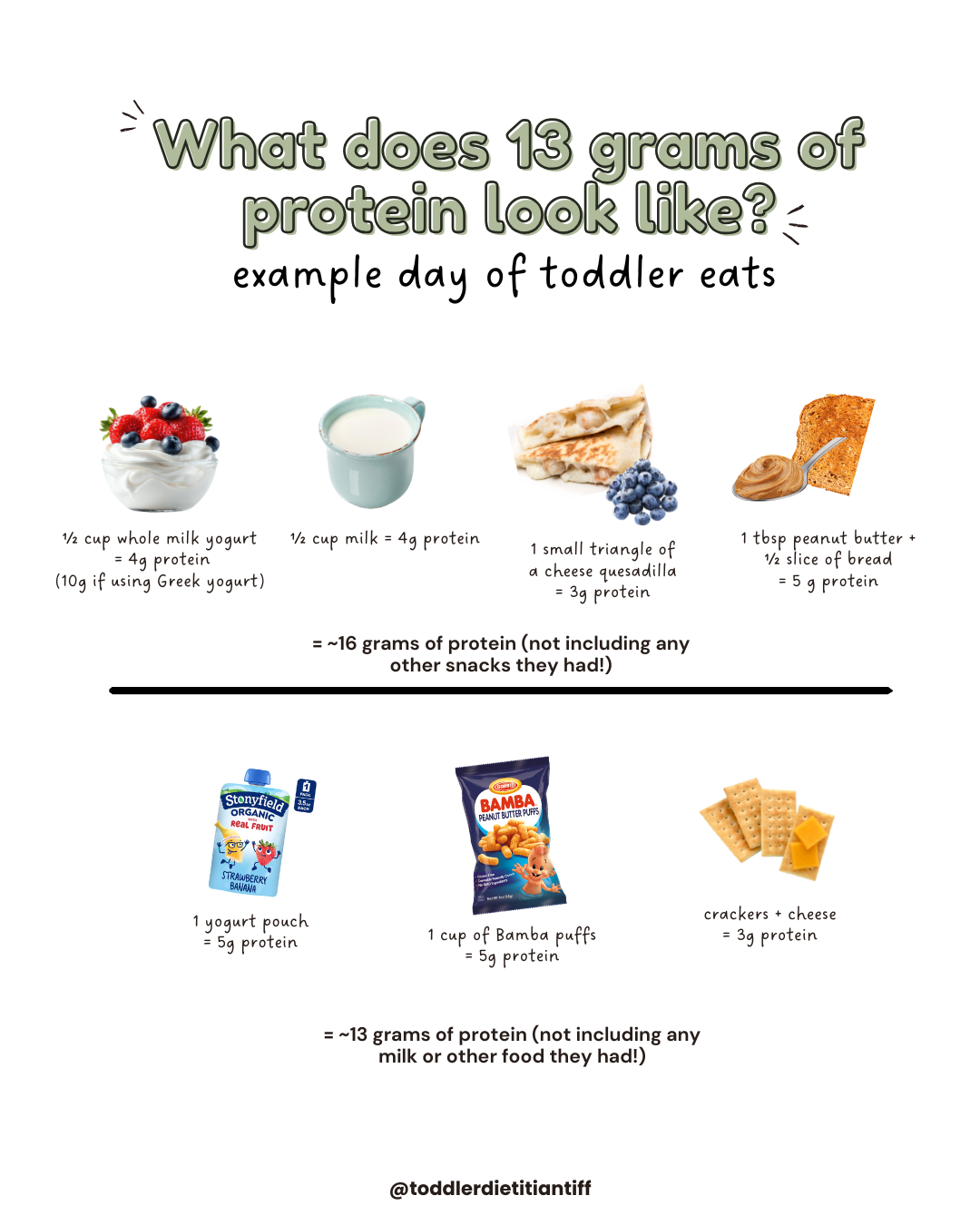
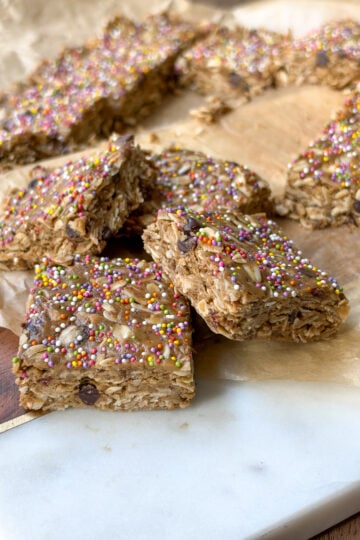
That's it! And it adds up fairly quickly, which is a big reason most toddlers meet their toddler protein needs without a special effort from you. A cup of milk, a couple tablespoons of nut butter, bites from an oatmeal bar, and a few bites of egg or beans spread across the day will usually get you there and then some.
Instead of tracking grams, focus on offering a source of protein at most meals and some snacks and letting the day average out. A lot of toddlers meet all of their protein intake just in milk alone!
Protein Foods for Toddlers (With Realistic Serving Sizes)
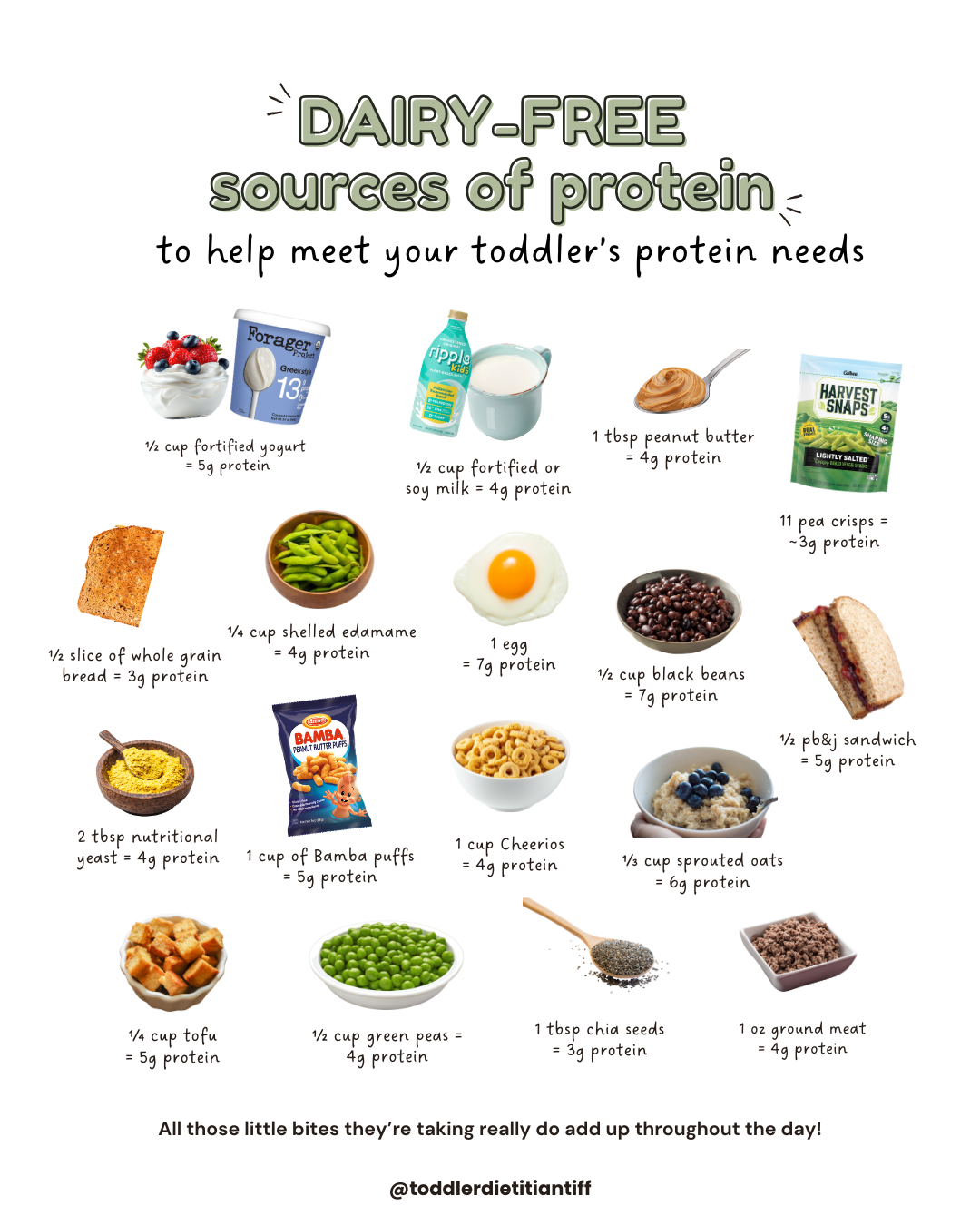
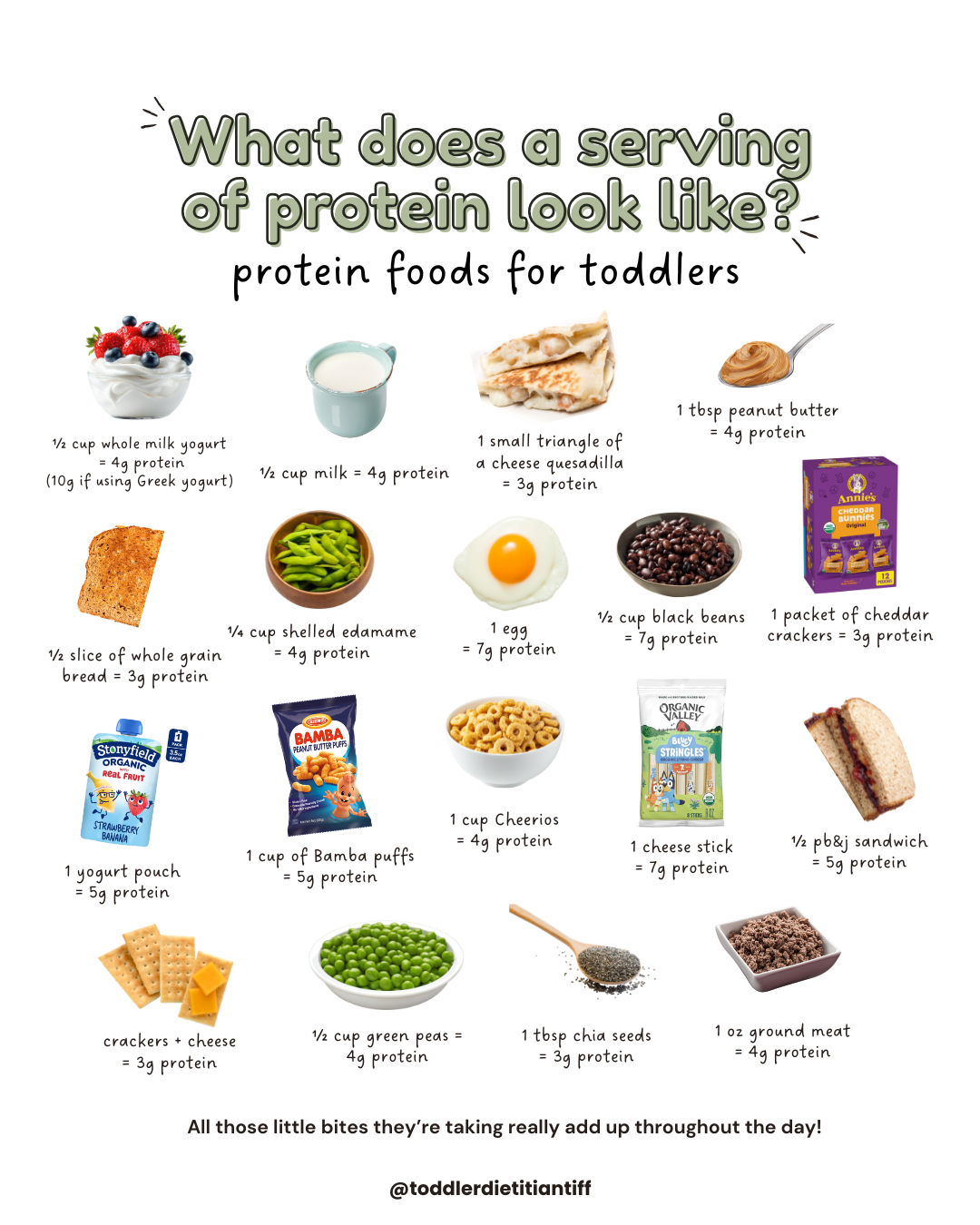
Here's a list of protein foods for toddlers that you can keep in your saved links:
Eggs & Dairy
Egg – 1 whole egg = ~6g protein
Greek yogurt (whole milk) – ¼ cup (4 tbsp) = ~5g protein
Cottage cheese – ¼ cup = ~7g protein
Cheese – 1 oz slice or stick = ~6-7g protein (1 Babybel cheese round is 4g protein)
Whole milk – ½ cup = ~4g protein
Yogurt pouch – 1 Stonyfield yogurt pouch = 5g protein
Easy ways to serve:
- scrambled eggs mixed into rice or oatmeal or overnight oats
- cottage cheese queso with soft veggies or crackers
- cinnamon cottage cheese toast
- yogurt with fruit stirred in (skip the pouches with added sugar when you can)
- cheese melted onto pasta, toast, or quesadillas
- egg crepe filled with yogurt and fruit
Meat, Poultry & Fish
Ground beef or turkey – 1 oz cooked = ~7g protein
Chicken (shredded or ground) – 1 oz cooked = ~7g protein
Salmon – 1 oz cooked = ~6-7g protein
Meatballs – 2-3 toddler-sized = ~5-6g protein
Burger patty – 1 oz cooked = ~6-7g protein
Meat is one of the most concentrated high protein foods for toddlers, plus it gives you iron and zinc in the same bite.
Easy ideas:
- veggie-packed meatballs or turkey apple meatballs
- shredded rotisserie chicken tossed into pasta or quesadillas
- oven baked chicken strips
- flaked salmon mixed into rice with a little mayo or avocado
- ground beef or turkey crumbled into sauce, tacos, or rice bowls
- storebought meatballs or chicken meatballs
- homemade veggie-packed meatballs
- meatloaf meatballs
- turkey apple meatballs
- zucchini cheddar meatballs
- mongolian meatballs
- shredded beef like this short rib beef ragu pasta
- ground turkey or chicken patties
- shredded pulled pork or chicken
- chicken nuggets or tenders
- Serenity Kids meat pouches (use code 'TIFFANY' for 20% off)
- Cerebelly pouches turned into popsicles or stirred with pasta
Beans, Legumes & Tofu
Lentils – ¼ cup cooked = ~4.5g protein
Chickpeas or black beans – ¼ cup (4 tbsp) = ~4g protein
Chickpea pasta – ¼ cup = ~7g protein
Tofu – ¼ cup = ~5g protein
Edamame – ¼ cup shelled = ~4g protein
Green peas – ½ cup cooked = ~4.5g protein
These are such a win because you're also getting fiber + iron in the same scoop! Toddlers may not go for plain lentils or chickpeas, but adding some chickpea or lentil noodles feels familiar! You can even "dress" it up with butter + grated parmesan, marinara sauce, pesto, cheesy or Alfredo sauce for the ultimate cheesy pasta.
Ways to serve:
- steamed edamame for snack boxes or lunchboxes
- black bean hummus or white bean dip with crackers
- ABC lentil muffins
- blender muffins with chickpeas blended into the batter like my pumpkin chickpea muffins, lemon blueberry chickpea muffins, cornbread chickpea muffins
- tofu fries or cubed tofu tossed into stir fry
- lentil pasta with marinara or pesto
- creamy lentil pasta sauce
- butternut squash sauce with chickpea/lentil pasta noodles
- pasta salad with tomatoes, mozzarella pearls, and chopped turkey pepperoni or rotisserie chicken
- crunchy roasted chickpeas (2+, depending on the eater's chewing ability)
- make red lentil or chickpea pancakes
- stir into sloppy joes
Nut Butters, Seeds & Whole Grains
- Peanut or almond butter – 1 tablespoon = ~3.5-4g protein
- Hemp seeds – 1 tablespoon = ~3g protein
- Oats – ½ cup cooked = ~3g protein (sprouted oats will have 6g per ⅓ cup!)
- Quinoa – ½ cup cooked = ~4g protein
- Bread – 1 slice of bread = ~4g protein
- Pasta – ½ cup cooked = ~4g protein
Easy add-ins:
- nut butter spread on toast, pancakes, muffins, or apple slices
- hemp seeds sprinkled on yogurt or oatmeal like "sprinkles"
- quinoa mixed into muffins or served as a side
- sunbutter date energy bites
- stirred into oatmeal
- stirred into a yogurt dip for apple slices
- added into baked goods like these chickpea blondies
These protein foods for toddlers also contain beneficial fats, fiber, and iron for those little growing bodies!
Stuck in food ruts with your picky toddler? Let's chat!
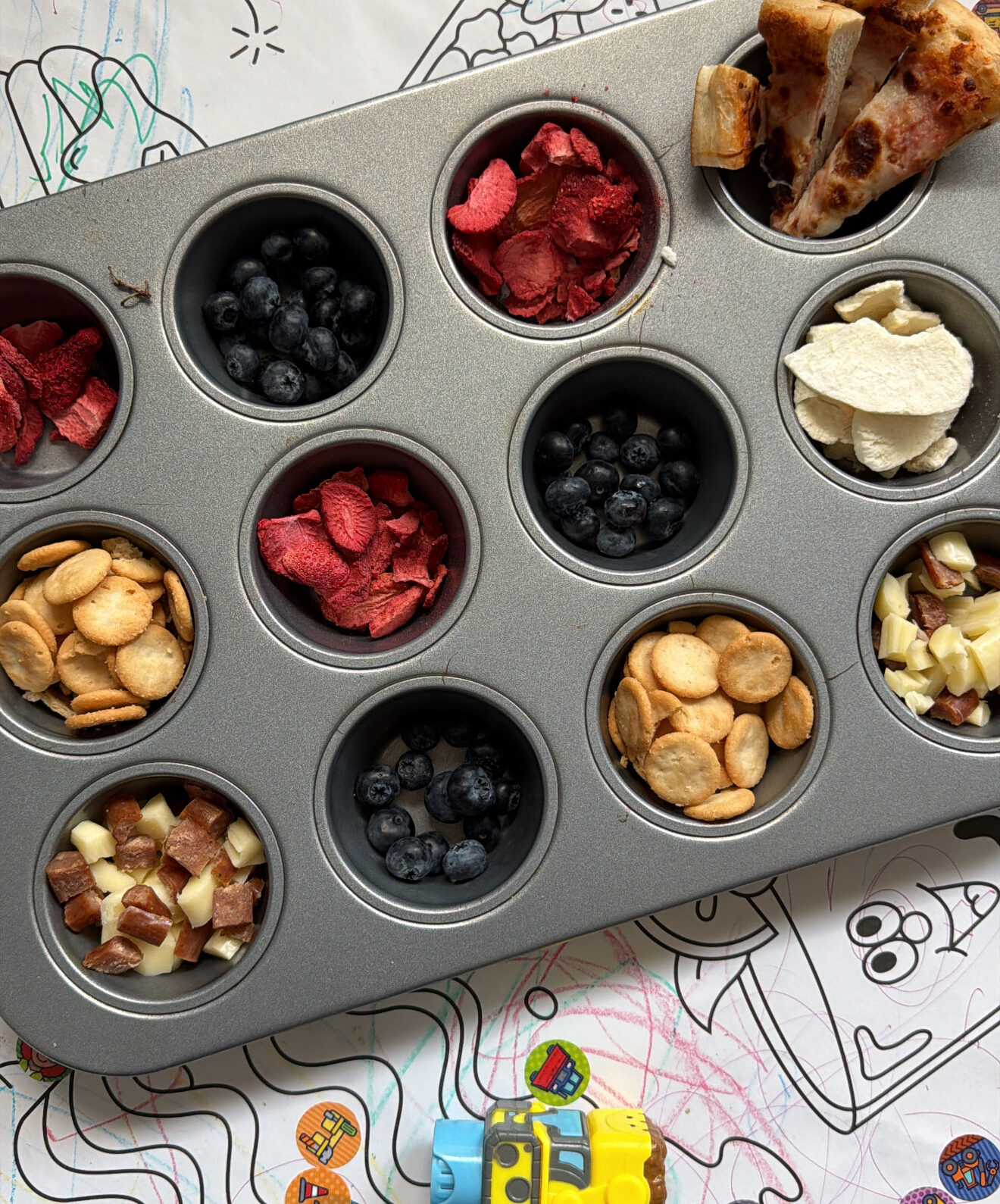
Easy Protein-Packed Meal Ideas for Toddlers
Since I totally get how mom brain works, here are 10 easy meal ideas to help support your toddler's protein intake:
- scrambled eggs or chicken sausage + cinnamon cottage cheese toast + berries
- turkey apple meatballs + roasted broccoli + rice
- bean & cheese quesadilla + avocado + strawberries
- ABC lentil muffins + yogurt with chia "sprinkles"
- cottage cheese queso with soft veggie dippers + crackers
- tofu fries + edamame + mango fruit cup
- overnight oats made with whole milk + nut butter stirred in + hemp seeds
- shredded chicken pasta salad + peas + orange slices
- buttered chickpea noodles + peas + strawberries + avocado cubes (even tossed in hemp hearts)
- egg crepe with nut butter and banana inside (or fruit served on the side)
- veggie-packed meatballs + veggie orzo + pears
- lentil spaghetti w/ marinara or alfredo + veggie meatballs + caesar salad + pears
A rule of thumb can be, taking one of the protein foods for toddlers and pairing it with a carb, fruit, and veggie!
Tiff's Dietitian Tip
A toddler’s portion is usually about ¼-½ of an adult serving, so don’t stress if it looks “small" on the plate. Layer a couple of protein foods for toddlers across breakfast, lunch, dinner, and one snack, and it adds up fast!
What If My Toddler Won't Eat Protein Foods?
Totally normal, especially with meat, which tends to be one of the more commonly refused textures. This comes up a lot with protein for picky eaters. Instead of pushing or pressuring, focus on:
- repeated exposure (10-20+ times is normal before a food is accepted)
- changing the form (ground vs. whole, blended into sauce, mixed into a muffin)
- pairing with a familiar "comfy food"
- keeping mealtimes low pressure
Remember, it's your job to offer and their job to decide! There are so many protein foods for toddlers and ways they can meet their needs, try to take a deep breath.
Can My Toddler Eat Too Much Protein?
With protein being everywhere right now, I get this question a lot. For most healthy toddlers, the answer is no.
That 13 grams per day for ages 1-3 is an RDA, not a max. If your toddler eats 20 or 25 grams one day, no need to panic or start limiting their yogurt. There's also no established Tolerable Upper Intake Level for protein in toddlers, meaning there's no specific number where we can say "anything above this is too much."
Research on protein and growth exists, but it's not as simple as "too much protein equals too much weight gain." The CHOP trial found babies on higher-protein formula had a higher weight-for-length at age 2 than those on lower-protein formula. A 2022 systematic review found that link was strongest when higher intake happened at 18 months and younger, though the authors noted a lack of high-quality trials overall. And when researchers looked specifically at protein intake during the second year of life, higher intake was linked to greater fat mass later on, but the evidence for BMI and obesity risk itself was inconclusive.
So the research is mixed, and there isn't enough evidence to set a real upper limit for toddlers. Unless your toddler's plate is only ever meat, cheese, and yogurt with nothing else on it, there's no need to cap or track their protein.
Honestly, it's way more worth your energy to focus on offering a variety of nutrient dense foods than stressing over one nutrient!
BUT here's where I think we need to pump the brakes...
Just because there's no established upper limit doesn't mean we need to be making EVERYTHING high protein. These protein foods for toddlers doesn't need to make up majority of their intake.
Protein pancakes + high-protein yogurt + protein bars + protein pasta + protein powder in their smoothie + a huge serving of meat at dinner...
Your toddler probably doesn't need all of that. And this is really where my concern would be with intentionally overloading a toddler's diet with protein.
Toddlers have little stomachs, which means I want to make sure there's room for ALL the other nutrients they need too like carbohydrates, healthy fats, fiber, iron, fruits, veggies, whole grains, etc. If they're filling up on protein-packed foods all day long, those foods may start crowding out other important foods and nutrients.
If you're worried your toddler isn't getting enough (extremely limited diet, very few protein foods accepted, or a medical reason to be concerned), that's a conversation for your pediatrician or a dietitian, not something to solve with a supplement on your own.
Okay, Let's Wrap It Up!
Protein doesn't have to be complicated or something you're chasing all day. By offering protein foods for toddlers in realistic portions, spacing them across meals and snacks, and mixing animal and plant sources, you'll help your little one thrive without the extra stress.
Most toddlers are already getting what they need. Keep offering a variety, even if it's just a bite or two some days, and trust that it adds up over the week.
If you found this post on protein foods for toddlers helpful, I would love for you to leave a rating or comment if you'd like to see more of these type of posts! And if you're still feeling stuck on your feeding journey with your toddler or stuck in food ruts, APPLY HERE to chat more with me and get the knowledge + confidence you deserve to help your little one get the nutrition they need!
xoxo, toddler dietitian tiff
Disclaimer: This post is for educational purposes only and should not replace individualized medical advice. Every child develops at their own pace, and safe food choices will depend on your little one's age, chewing ability, and readiness for textures. Always supervise your baby or toddler during meals and adjust food sizes and textures as needed. Decisions made regarding a child’s health and treatment should be made with a qualified health provider.
References:
National Academies of Sciences, Engineering, and Medicine. (2005). Dietary reference intakes for energy, carbohydrate, fiber, fat, fatty acids, cholesterol, protein, and amino acids. National Academies Press. https://www.ncbi.nlm.nih.gov/books/NBK214999/
American Academy of Pediatrics, Committee on Nutrition. (2016). Serving sizes for toddlers. HealthyChildren.org. https://www.healthychildren.org/English/ages-stages/toddler/nutrition/Pages/serving-sizes-for-toddlers.aspx
Chen, Y., et al. (2015). Growth and development in Chinese pre-schoolers with picky eating behaviour: A cross-sectional study. PLOS ONE. https://www.ncbi.nlm.nih.gov/pmc/articles/PMC4395402/
Taylor, C. M., & Emmett, P. M. (2019). A narrative review of childhood picky eating and its relationship to food intakes, nutritional status, and growth. Nutrients. https://www.ncbi.nlm.nih.gov/pmc/articles/PMC6316224/
Tang, M. (2018). Protein intake during the first two years of life and its association with growth and risk of overweight. International Journal of Environmental Research and Public Health, 15(8), 1742. https://pubmed.ncbi.nlm.nih.gov/30110887/
Braun, K. V., Erler, N. S., Kiefte-de Jong, J. C., Jaddoe, V. W., van den Hooven, E. H., Franco, O. H., & Voortman, T. (2016). Dietary intake of protein in early childhood is associated with growth trajectories between 1 and 9 years of age. The Journal of Nutrition, 146(11), 2361–2367. https://pubmed.ncbi.nlm.nih.gov/27733529/
Arnesen, E. K., Thorisdottir, B., Lamberg-Allardt, C., Bärebring, L., Nwaru, B., Dierkes, J., Ramel, A., & Åkesson, A. (2022). Protein intake in children and growth and risk of overweight or obesity: A systematic review and meta-analysis. Food & Nutrition Research, 66. https://pmc.ncbi.nlm.nih.gov/articles/PMC8861858/
Koletzko, B., von Kries, R., Closa, R., Escribano, J., Scaglioni, S., Giovannini, M., Beyer, J., Demmelmair, H., Gruszfeld, D., Dobrzanska, A., Sengier, A., Langhendries, J. P., Rolland Cachera, M. F., & Grote, V. (2009). Lower protein in infant formula is associated with lower weight up to age 2 y: A randomized clinical trial. The American Journal of Clinical Nutrition, 89(6), 1836–1845. https://pubmed.ncbi.nlm.nih.gov/19386747/
Gruszfeld, D., Weber, M., Gradowska, K., Socha, P., Grote, V., Xhonneux, A., Dain, E., Verduci, E., Riva, E., Closa-Monasterolo, R., Escribano, J., Koletzko, B., & European Childhood Obesity Study Group. (2016). Association of early protein intake and pre-peritoneal fat at five years of age: Follow-up of a randomized clinical trial. Nutrition, Metabolism and Cardiovascular Diseases, 26(9), 824–832. https://pubmed.ncbi.nlm.nih.gov/27212617/
Leave a Reply