
If you need a ridiculously easy dinner that your toddler can eat right alongside the rest of the family, this pasta and peas recipe is it! Chickpea pasta and frozen peas cook right in bone broth, then Boursin and Parmesan get stirred in at the end for the easiest creamy sauce.
There's no separate sauce to make and no need to drain the pasta. Everything comes together in one pot in about 15 minutes, making this one of my favorite meals for those nights when you need to get dinner on the table FAST.
As a pediatric dietitian and mom, I especially love using chickpea pasta here because it provides protein, fiber, and iron while still giving little ones that familiar pasta experience. Pair that with peas and a creamy, cheesy sauce, and you've got an easy family meal with very little effort.
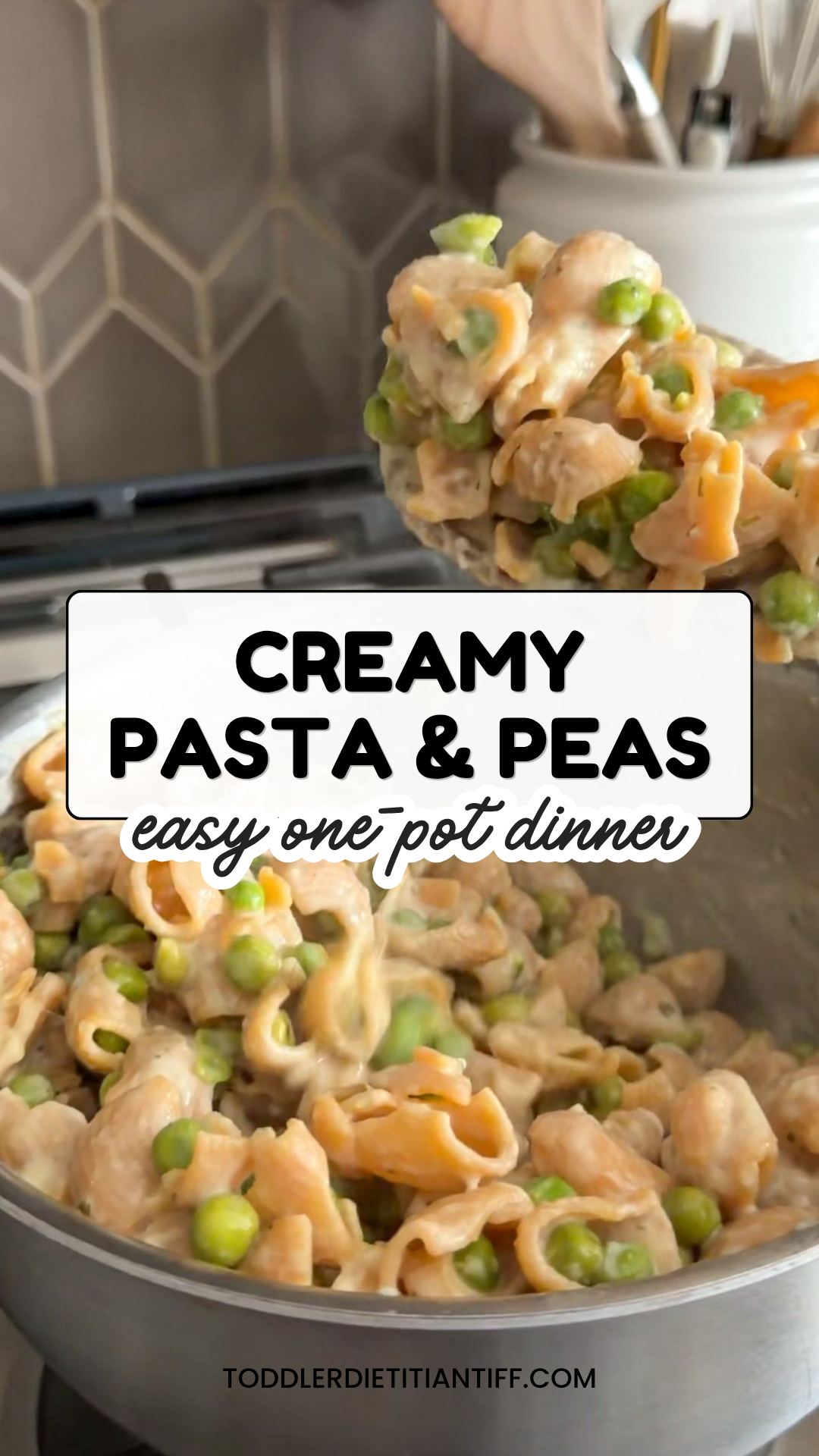
Why You'll Love This Pasta and Peas
- Made in one pot
- No draining required
- Ready in about 15 minutes
- Uses just a handful of ingredients
- Made with chickpea pasta for protein, fiber, and iron
- Easy way to serve peas alongside a familiar food
- Creamy without making a separate sauce
- Toddler-friendly AND family-friendly
- Easy to customize with additional protein if desired
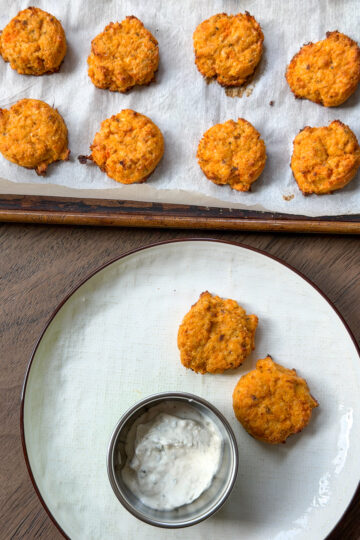
This pairs so well with my salmon patties or veggie meatballs for extra protein and iron! I feel like peas are such an underrated food, but they are actually a great vegetarian protein source and fiber-packed.
Jump to:
- Why You'll Love This Pasta and Peas
- Ingredients You'll Need
- How to Make Pasta and Peas
- Hint for the Best Pasta and Peas
- Why I Love Using Chickpea Pasta
- Optional Protein Additions to Pasta and Peas
- Substitutions
- Variations
- Equipment
- Storing Your Pasta and Peas
- Tiff's Dietitian Tip
- FAQ
- Related
- Pairing
- Creamy One-Pot Pasta and Peas
Ingredients You'll Need
Here's what you'll need to make these easy creamy pasta and peas recipe:
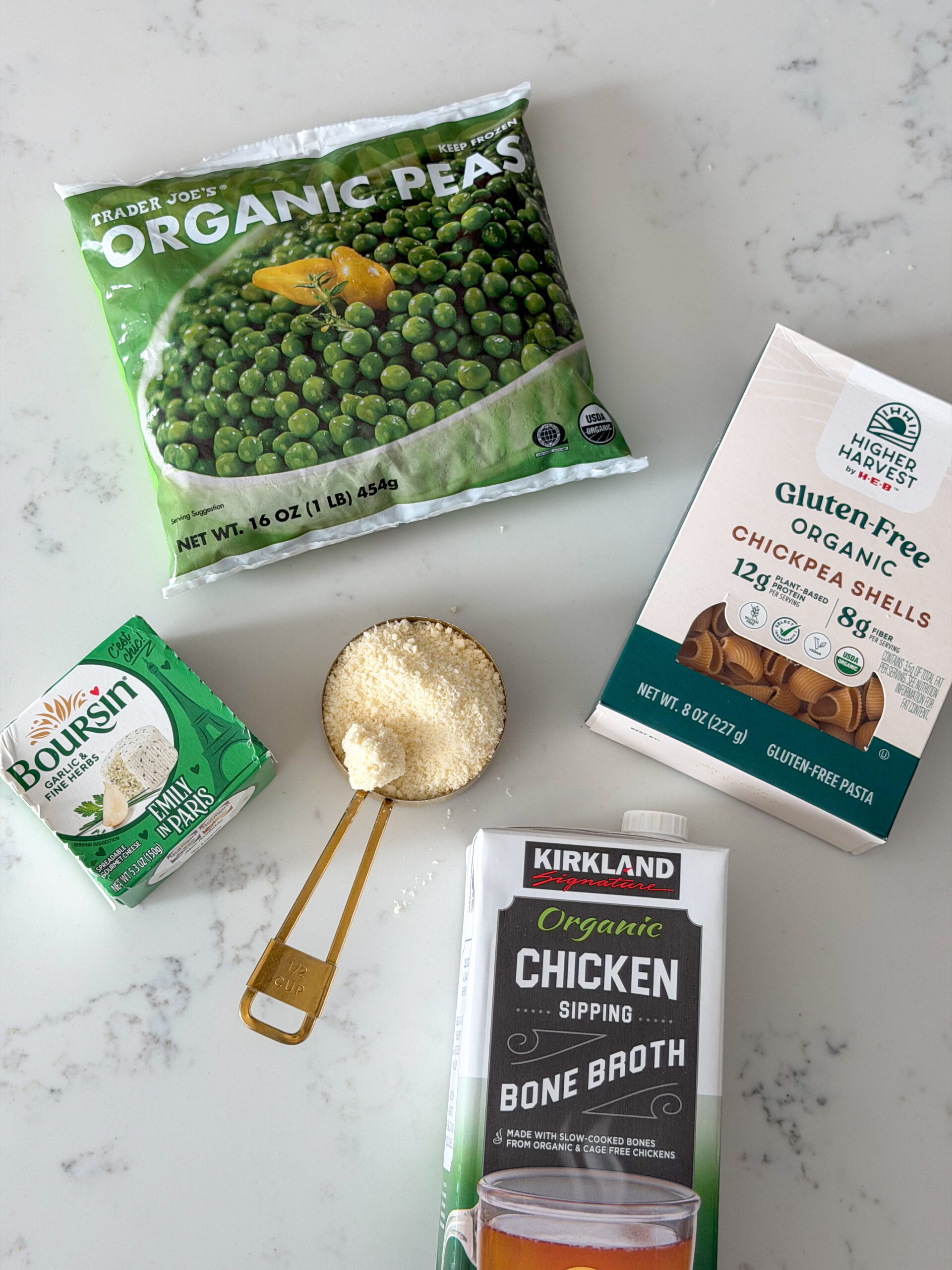
- Chickpea pasta: Chickpea noodles are the base of this recipe and provide protein, fiber, and iron.
- Low-sodium bone broth (or chicken/vegetable broth): Instead of boiling the pasta in water, the chickpea pasta cooks directly in bone broth. It adds flavor and additional protein while eliminating the need to drain the pasta.
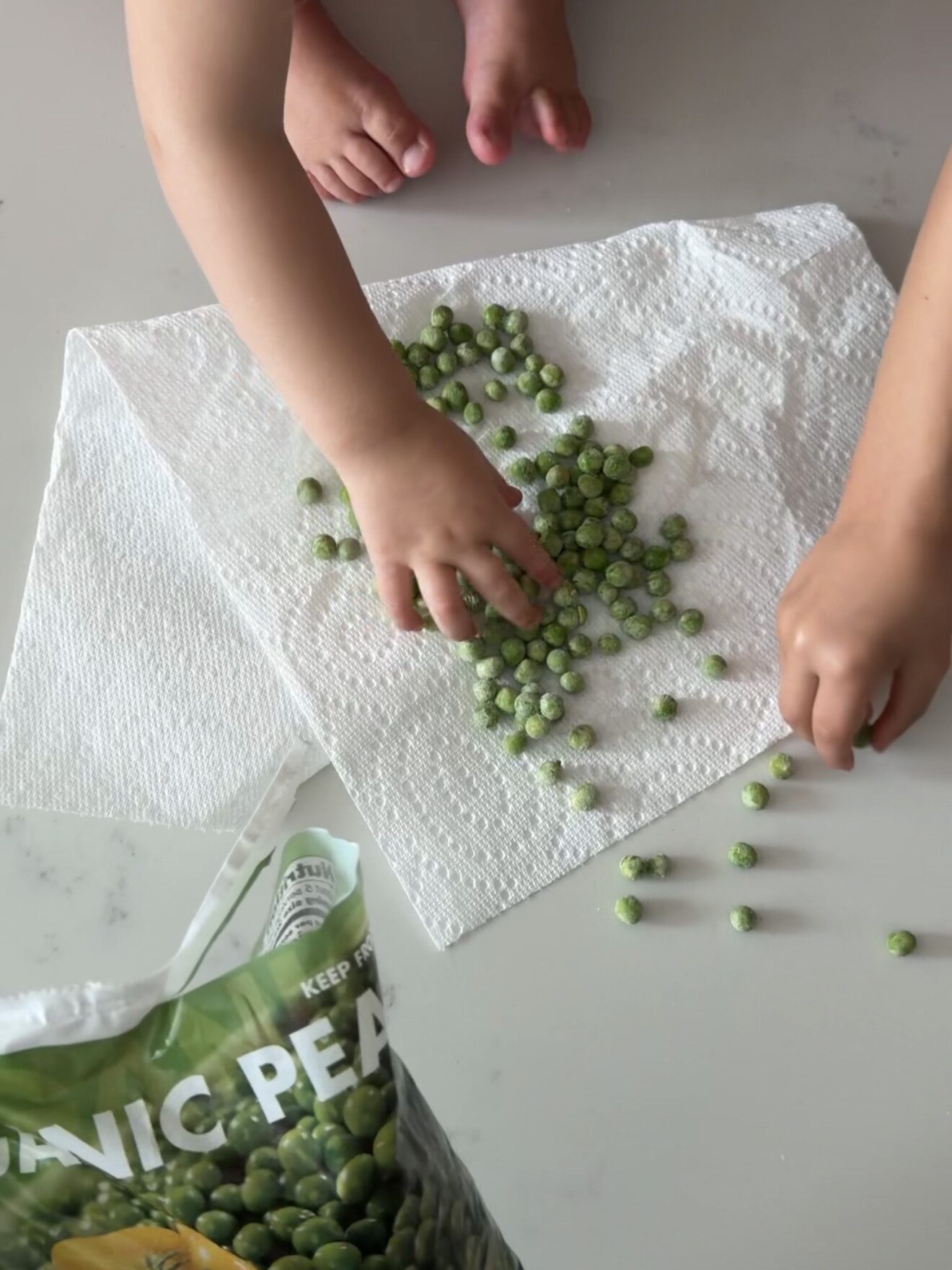
- Frozen peas: An easy freezer staple that adds fiber, plant-based protein, color, and a little natural sweetness. No need to thaw them first!
- Boursin cheese: My shortcut for making this pasta extra creamy and flavorful without preparing a separate sauce. Garlic & Fine Herbs is my favorite here.
- Parmesan cheese: Adds a little extra cheesy, savory flavor to the finished pasta.
- Milk: This is optional! Add a splash at the end only if you need to loosen the sauce or want an extra-creamy consistency.
See recipe card for quantities.
How to Make Pasta and Peas
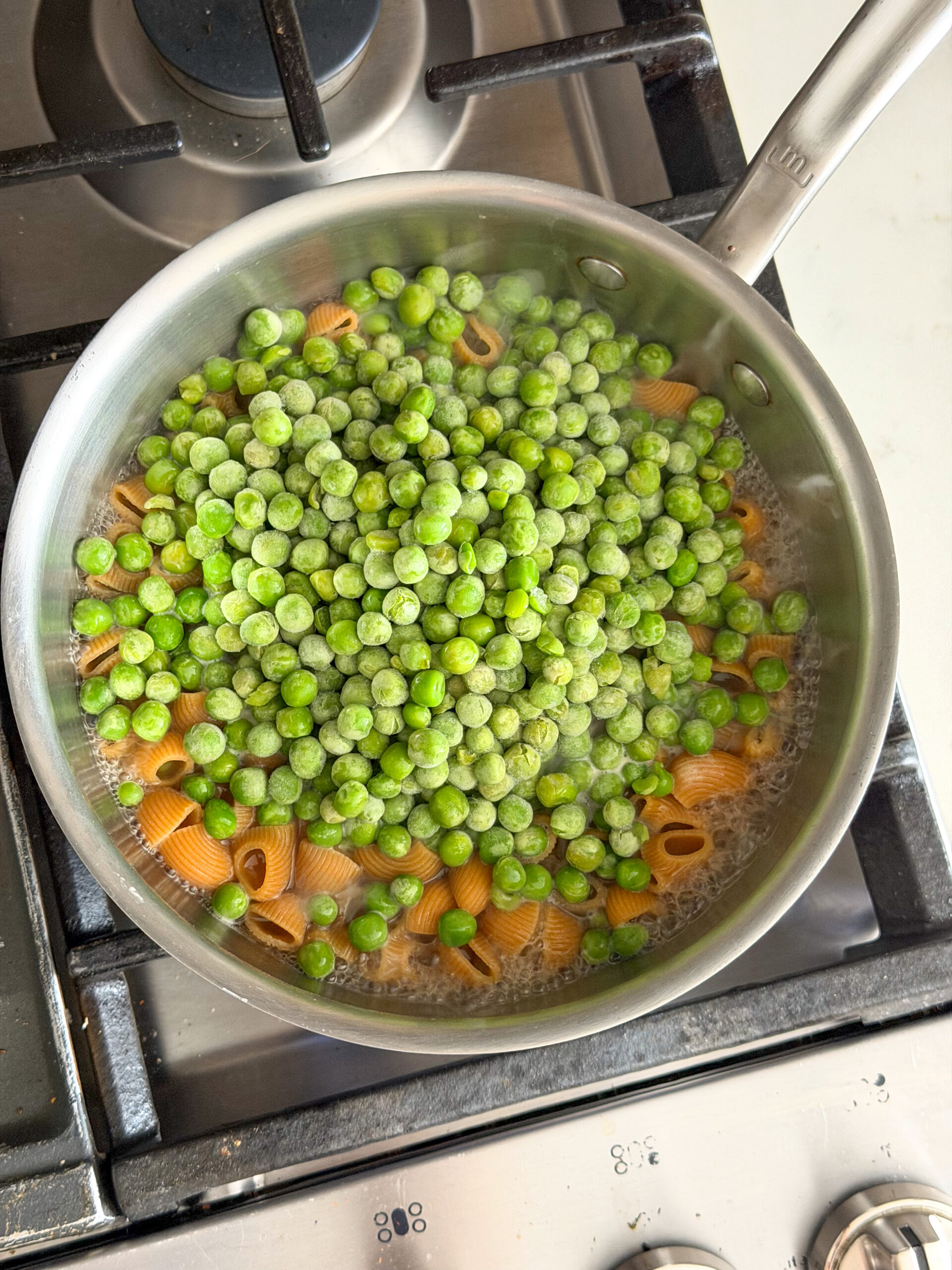
- Step 1: Add the chickpea pasta and low-sodium bone broth to a medium pot. Bring to a boil, then reduce to a gentle simmer and cook according to the package directions, stirring frequently.
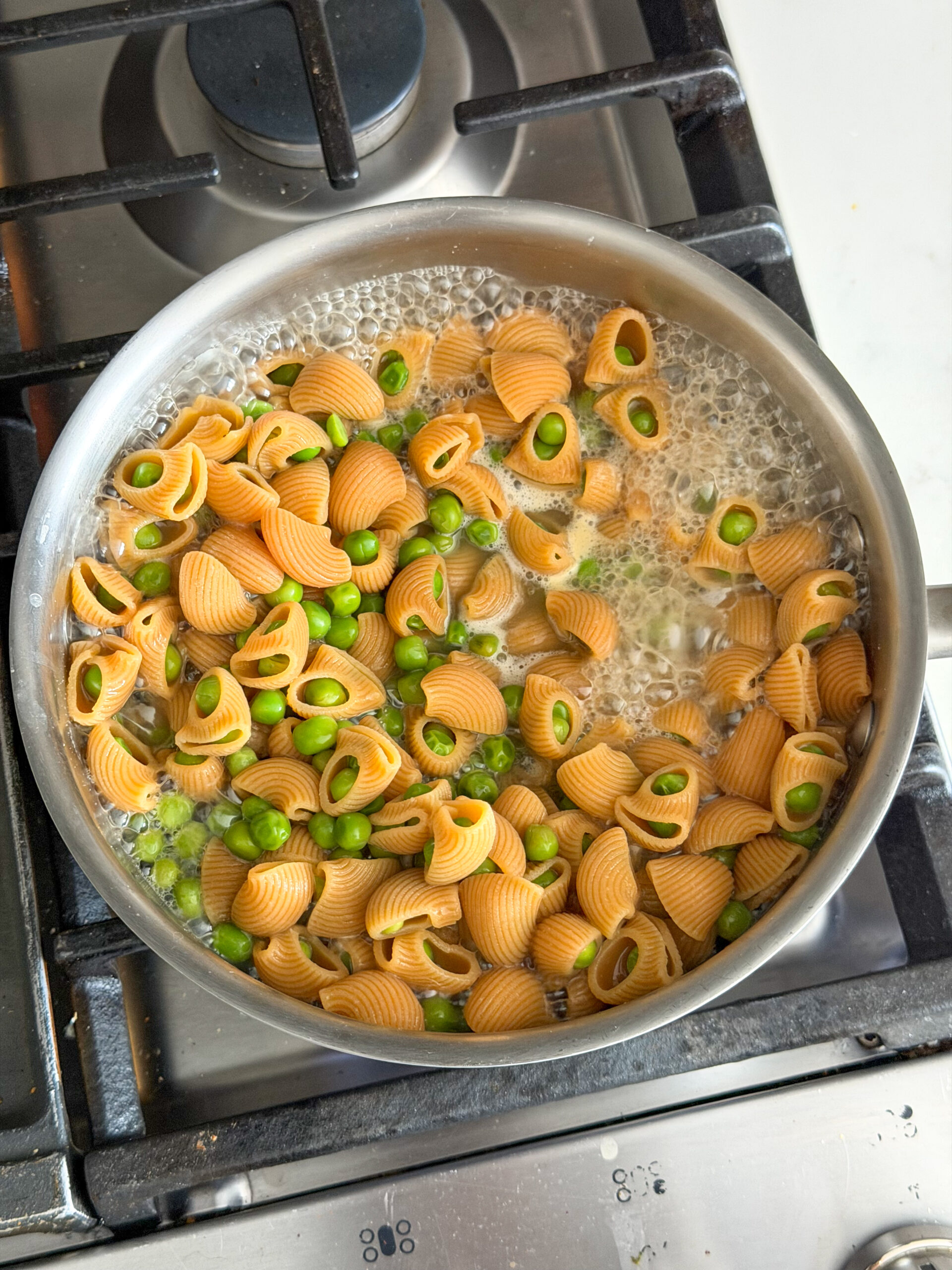
- Step 2: During the last 3-4 minutes of cooking, stir in the frozen peas. Continue cooking until the pasta is tender and most of the broth has been absorbed. Do not drain.
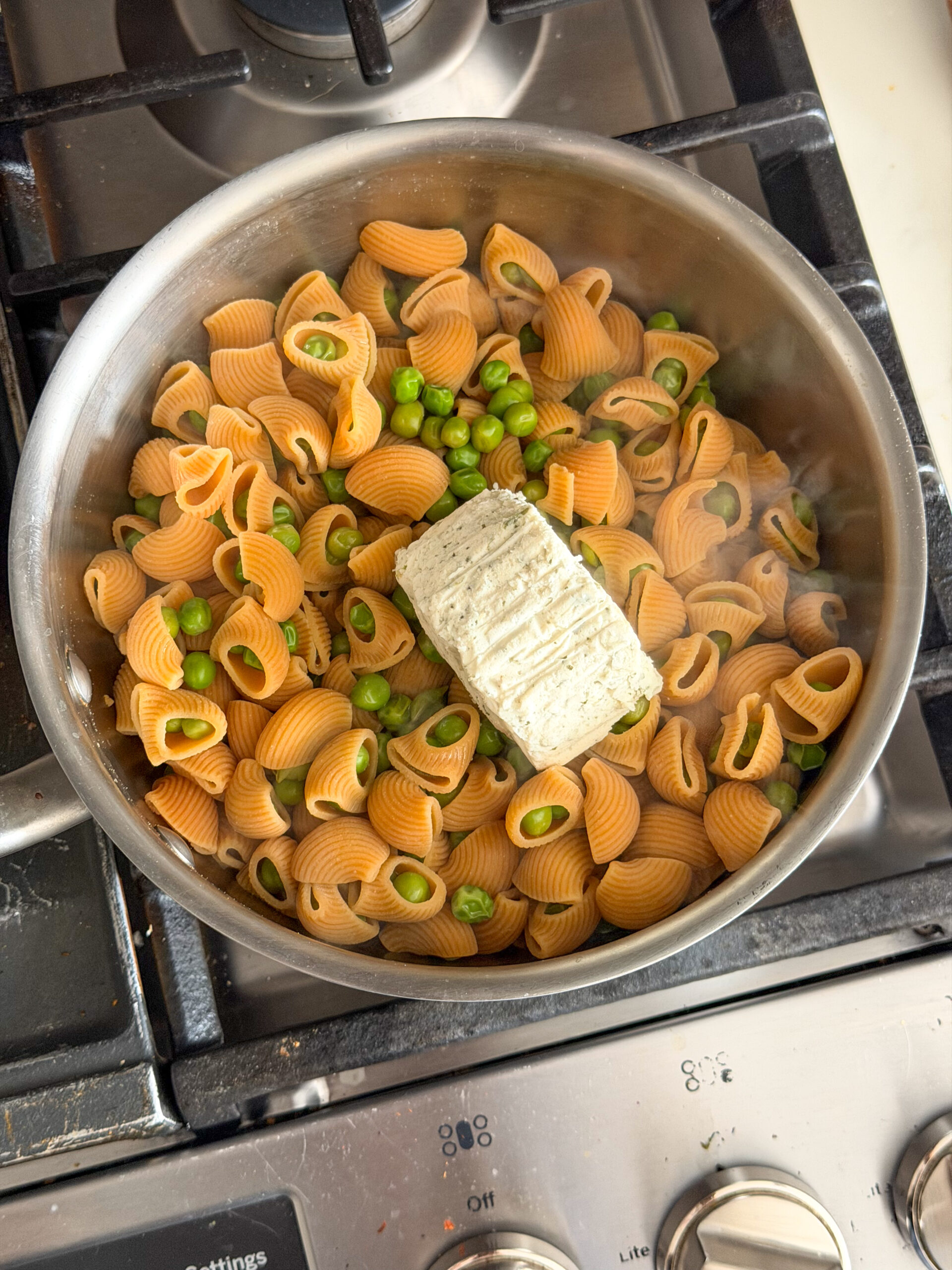
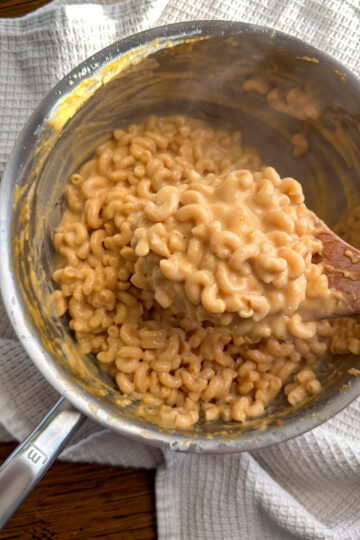
- Step 3: Reduce the heat to low and stir in the Boursin and Parmesan until melted and creamy. Add a splash of milk as needed to reach your desired consistency.
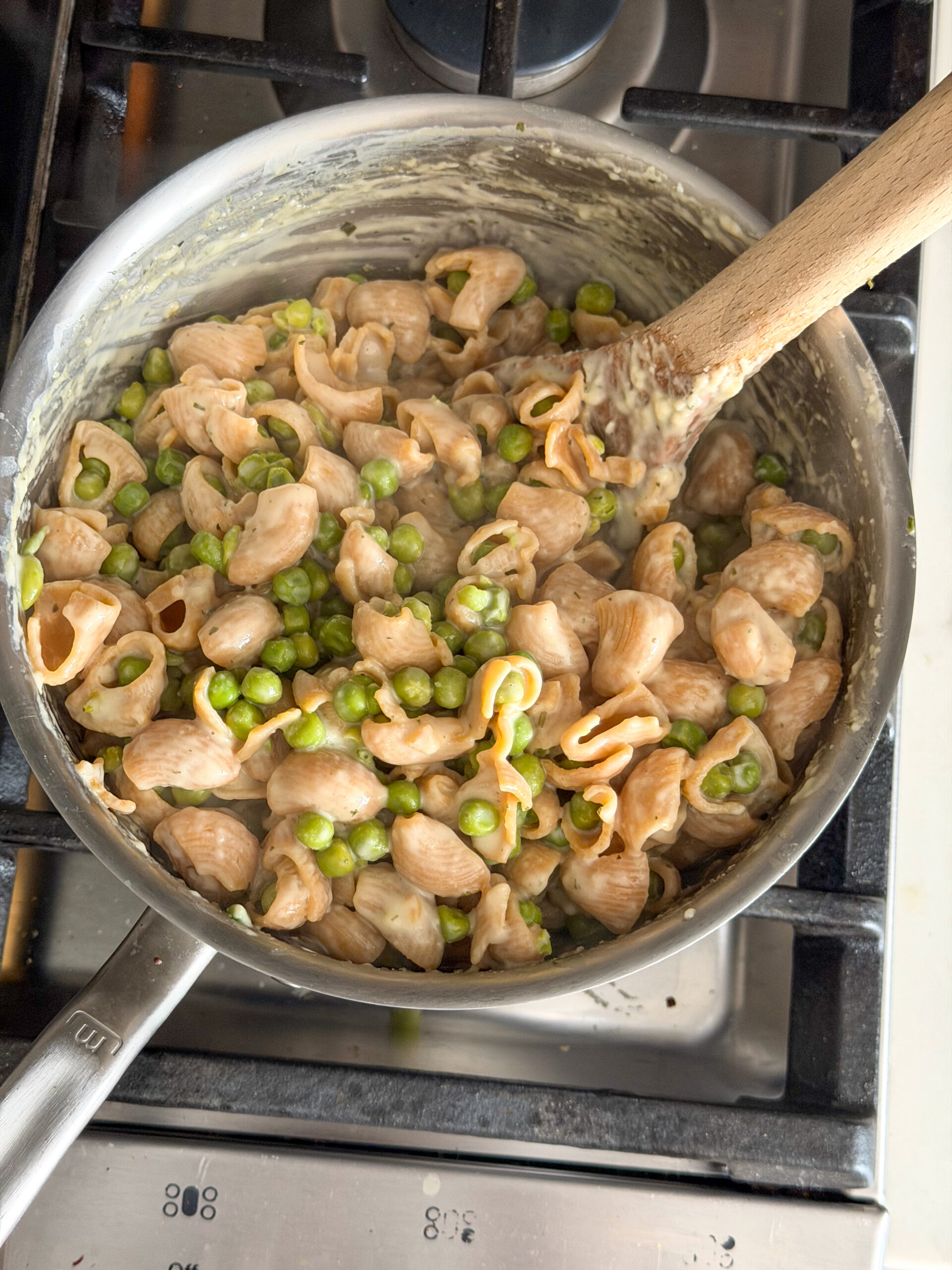
- Step 4: Remove from the heat and let the pasta sit for 1-2 minutes to thicken. Serve as is or stir in your favorite cooked protein for an even heartier meal.
Hint for the Best Pasta and Peas
Keep an eye on your liquid! Chickpea pasta can behave a little differently than traditional pasta, and different brands and shapes may absorb different amounts of broth. Start with enough broth to cook the noodles and add a splash more as needed rather than adding too much at once.
You want just a little starchy broth remaining when you add the Boursin and Parmesan. That's what helps everything turn into a creamy sauce without having to drain the pasta!
Why I Love Using Chickpea Pasta
You can absolutely make pasta and peas with traditional pasta, but chickpea pasta is one of my favorite easy swaps when I want to add a little more nutrition without making dinner more complicated.
Because it's made primarily from chickpeas, chickpea pasta naturally provides protein, fiber, and iron. That means you already have a good source of plant-based protein built right into the meal.
And this isn't about making regular pasta "bad" or something you need to replace! It's simply another option for adding variety to the types of grains and legumes your kids are exposed to.
Optional Protein Additions to Pasta and Peas
The chickpea pasta and peas already provide plant-based protein, so you don't necessarily need to add another protein source. But if you want to make the meal even heartier, try adding:
- Shredded chicken
- Rotisserie chicken
- Chicken sausage
- Ground turkey
- Salmon
- Meatballs
- White beans
- Chickpeas
Simply stir your cooked protein into the pasta at the end until warmed through.
Substitutions
This pasta and peas is already gluten-free if using chickpea noodles, egg-free, and nut-free! Use dairy-free Boursin or omit with just coconut milk + nutritional yeast for a dairy-free version.
- Chickpea pasta: Regular pasta, wheat pasta, lentil pasta, or another legume-based pasta can be used, but cooking times and the amount of liquid needed may vary.
- Bone broth: Substitute low-sodium chicken broth or vegetable broth.
- Frozen peas: Fresh peas can also be used. You can also try shelled edamame for a different texture and flavor.
- Boursin: Substitute cream cheese, goat cheese, or another soft herbed cheese.
- Parmesan: Substitute another finely grated hard cheese, nutritional yeast, or omit if preferred.
- Milk: Use whole milk or your family's preferred unsweetened dairy-free milk. You only need it if the pasta needs additional liquid at the end.
Variations
Feel free to add more mix-ins to this pasta and peas or leave as is!
- Add spinach: Stir finely chopped spinach into the pasta at the end and let it wilt into the sauce.
- Extra cheesy: Add additional Parmesan or a little shredded mozzarella.
- Add chicken: Stir in shredded rotisserie chicken for an easy way to make the meal heartier.
- Add lemon: Finish with a squeeze of fresh lemon juice for a little brightness.
- More veggies: Try adding finely chopped broccoli, shredded carrot or zucchini, or frozen mixed vegetables along with the peas.
- Make it saucier: Add an extra splash of milk or cream at the end for a looser, creamier sauce.
Equipment
All you need for this easy pasta and peas is a medium saucepan or pot and a wooden spoon or silicone spatula for stirring. Since everything cooks together in one pot and there's no draining required, you don't even need a colander making cleanup extra easy!
Storing Your Pasta and Peas
Store leftover pasta and peas in an airtight container in the refrigerator for up to 4 days.
The chickpea pasta will continue absorbing some of the sauce as it sits, so add a splash of milk or broth before reheating. Reheat gently on the stovetop or in the microwave until warmed through.
Tiff's Dietitian Tip
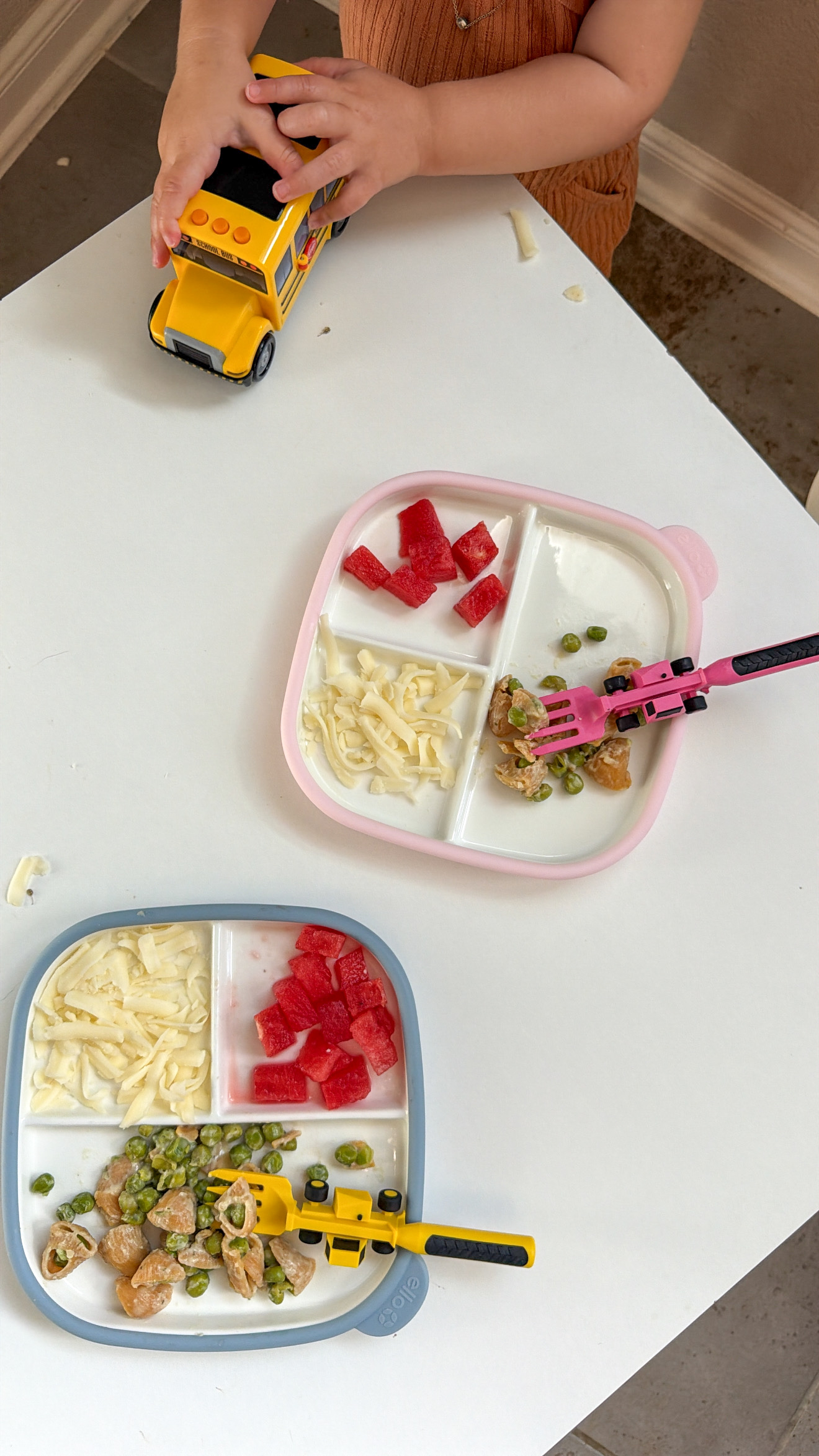
Pasta is a familiar food for a lot of toddlers, which makes it a great opportunity to serve another food they're still learning about alongside it. If your toddler doesn't eat the peas, that's okay! They don't need to eat every ingredient for the exposure to count.
If mixed foods are challenging for your child, you can even set aside a few peas and pieces of chickpea pasta before mixing everything together. Serve them separately alongside a small scoop of the finished creamy pasta.
FAQ
Yes! Chickpea pasta can be cooked directly in broth for this recipe. Just keep an eye on the liquid and stir frequently since chickpea pasta can cook differently than traditional wheat pasta.
Yes. Add frozen peas during the last few minutes of cooking so they have enough time to warm through and become tender without getting too mushy.
No! The goal is for the chickpea pasta to absorb most of the bone broth as it cooks. Any small amount left behind helps create the creamy sauce when you stir in the Boursin and Parmesan.
You don't have to add another protein because chickpea pasta and peas already provide plant-based protein. If you'd like to make it heartier, shredded chicken, chicken sausage, ground turkey, salmon, or another protein your family enjoys can easily be stirred in.
Related
Looking for other recipes like this? Try these:
Pairing
These are my favorite dishes to serve with this pasta and peas recipe:
Creamy One-Pot Pasta and Peas
Equipment
- pot
Ingredients
- 1 box (8 oz) chickpea pasta or pasta noodles of choice!
- 2 ½ to 3 cups low-sodium or no salt added chicken bone broth plus more as needed
- 1 ½ cups frozen peas or 1 whole frozen peas bag
- ½ package Garlic & Fine Herbs Boursin cheese sub with dairy-free Boursin if needed or goat cheese *can use full package for more creamy
- ¼ cup finely grated Parmesan cheese or nutritional yeast
- 2 to 4 tablespoons milk of choice as needed

Instructions
- Add the chickpea pasta and 2 ½ cups bone broth to a medium pot. Bring to a boil, then reduce to a gentle simmer and cook according to the package directions, stirring frequently. Add additional broth as needed to keep the pasta cooking without becoming soupy.
- During the last 3 to 4 minutes of cooking, stir in the frozen peas. Continue cooking until the pasta is tender and most of the broth has been absorbed. Do not drain.
- Reduce the heat to low. Stir in the Boursin and Parmesan until melted and creamy. Add milk 1 tablespoon at a time as needed to reach your desired consistency.
- Remove from the heat and let sit for 1 to 2 minutes to thicken. Serve immediately or stir in your favorite cooked protein for a heartier meal.
Notes
- Different brands and shapes of chickpea pasta may require slightly different amounts of liquid, so start with 2 ½ cups broth and add more as needed.
- Stir the pasta frequently since chickpea pasta can stick more easily than traditional pasta. There is no need to drain the pasta. A small amount of broth left in the pot helps create the creamy sauce.
- Use low-sodium or no salt added bone broth to help keep the overall sodium lower, especially when serving little ones. The Boursin and Parmesan already add plenty of flavor, so additional salt usually isn't necessary.
- If the pasta becomes too thick as it sits, stir in a splash of milk or broth.
Leave a Reply