
I'm obsessed with this one tool that can easily spark interest in food, so I wanted to share my favorite crinkle cutter ideas for toddlers as a toddler dietitian + mom! Toddlers are deeply influenced by how food looks and feels. The same food, in a different shape, on a different plate, can go from ignored to inhaled. It sounds maddening. But it's actually really useful once you know how to work with it!
Enter the crinkle cutter kitchen tool I genuinely use almost every day, and one of the first things I recommend to families in my practice navigating picky eating. Not because it's magic, but because novelty matters and sometimes the difference between a toddler engaging with a food and completely ignoring it is just a wavy edge (even makes it easier to hold for babies).
Why does shape matter for picky eaters? Research on food neophobia consistently shows that presentation including shape, color, and texture significantly influences toddlers' willingness to interact with and eventually accept foods. A crinkle cut adds visual novelty and tactile texture that makes food more engaging, especially for sensory-sensitive kids.
Why I Actually Use a Crinkle Cutter (Not Just for the Aesthetic)
A few real reasons this magical tool earns its drawer space:
- Novelty increases engagement. A food a toddler has refused before can look completely different in crinkle form, and sometimes that's enough to get them to interact with it. Not always eat it but touch it, smell it, bring it to their mouth. In other words, that counts as an exposure and exposures are the whole game.
- Texture helps with grip. The ridges on crinkle-cut foods give tiny hands something to hold onto, especially with slippery foods like avocado and banana. As a result, it's a huge win for baby-led weaning and independent self-feeding toddlers.
- Kitchen involvement before the meal. From about age 2.5 (depending on development and skills), toddlers can start using a crinkle cutter with supervision. Because of this, that engagement before eating, pressing the tool down and watching the shape appear, is a form of food exposure that builds curiosity and connection to the food before it ever hits the plate.
- It's simply easy to use. In fact, I treat it just like any other knife or cutting tool in my kitchen! Making these crinkle cutter ideas for toddlers come to life seamlessly.
13 Crinkle Cutter Ideas for Toddlers
Here are some of my favorite crinkle cutter ideas for toddlers to help them be a bit more interested in the food on their plate!
1. Carrot Fries
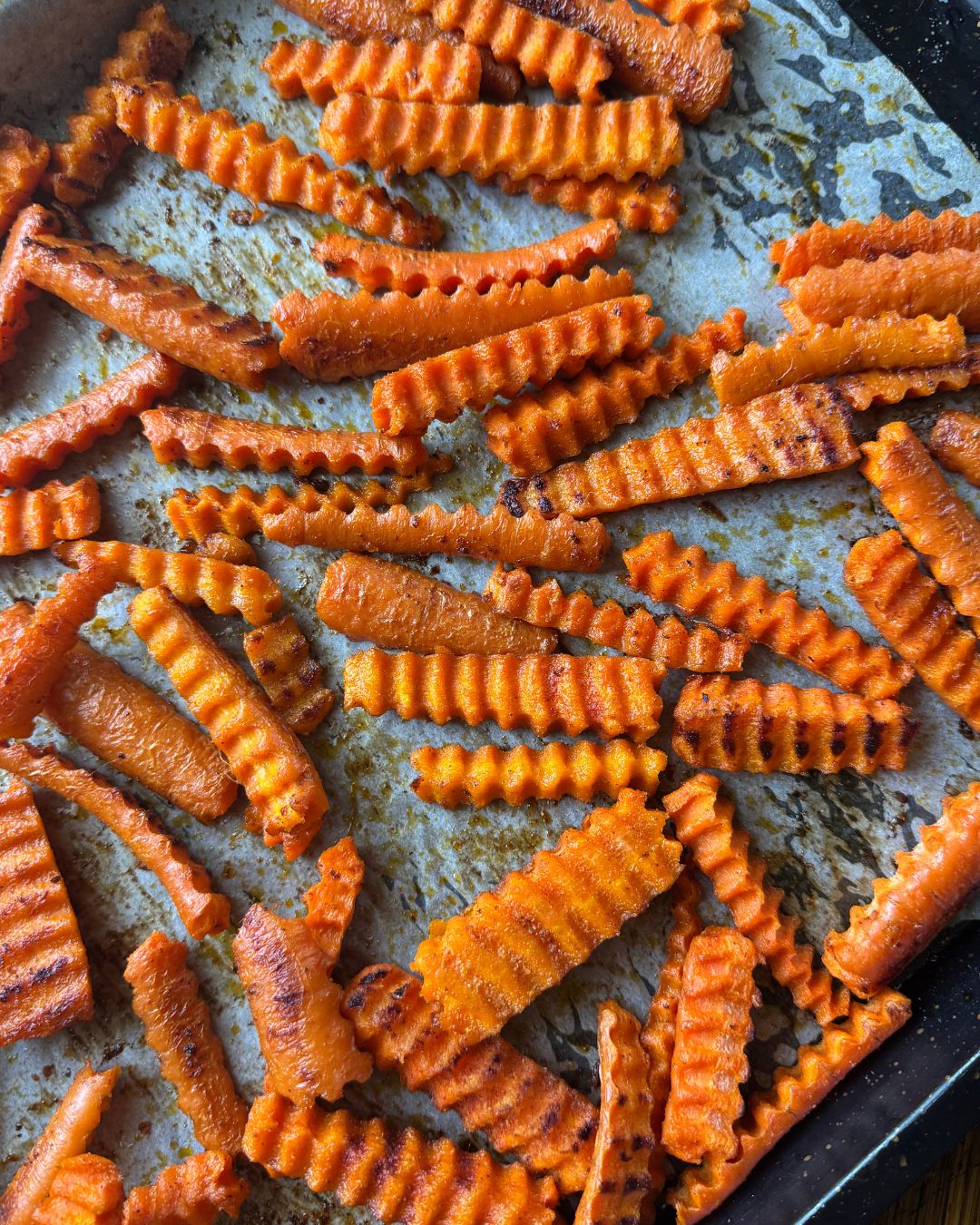
Slice carrots lengthwise into thin planks, then crinkle cut into fry-length strips. Toss in olive oil, roast at 400°F until tender and slightly caramelized. They come out looking exactly like french fries and most toddlers will at least try them on that basis alone.
Nutrition: Carrots are loaded with beta-carotene (vitamin A precursor) which supports immune function and eye health. Roasting in olive oil actually increases beta-carotene absorption since it's fat-soluble, so the olive oil is doing nutritional work, not just adding flavor.
Tip: To start, mix crinkle cut carrot fries with regular potato fries on the same plate. Because the crinkle cut makes them look similar, you can gradually shift the ratio over time until it's mostly carrots.
2. Cucumber Sticks
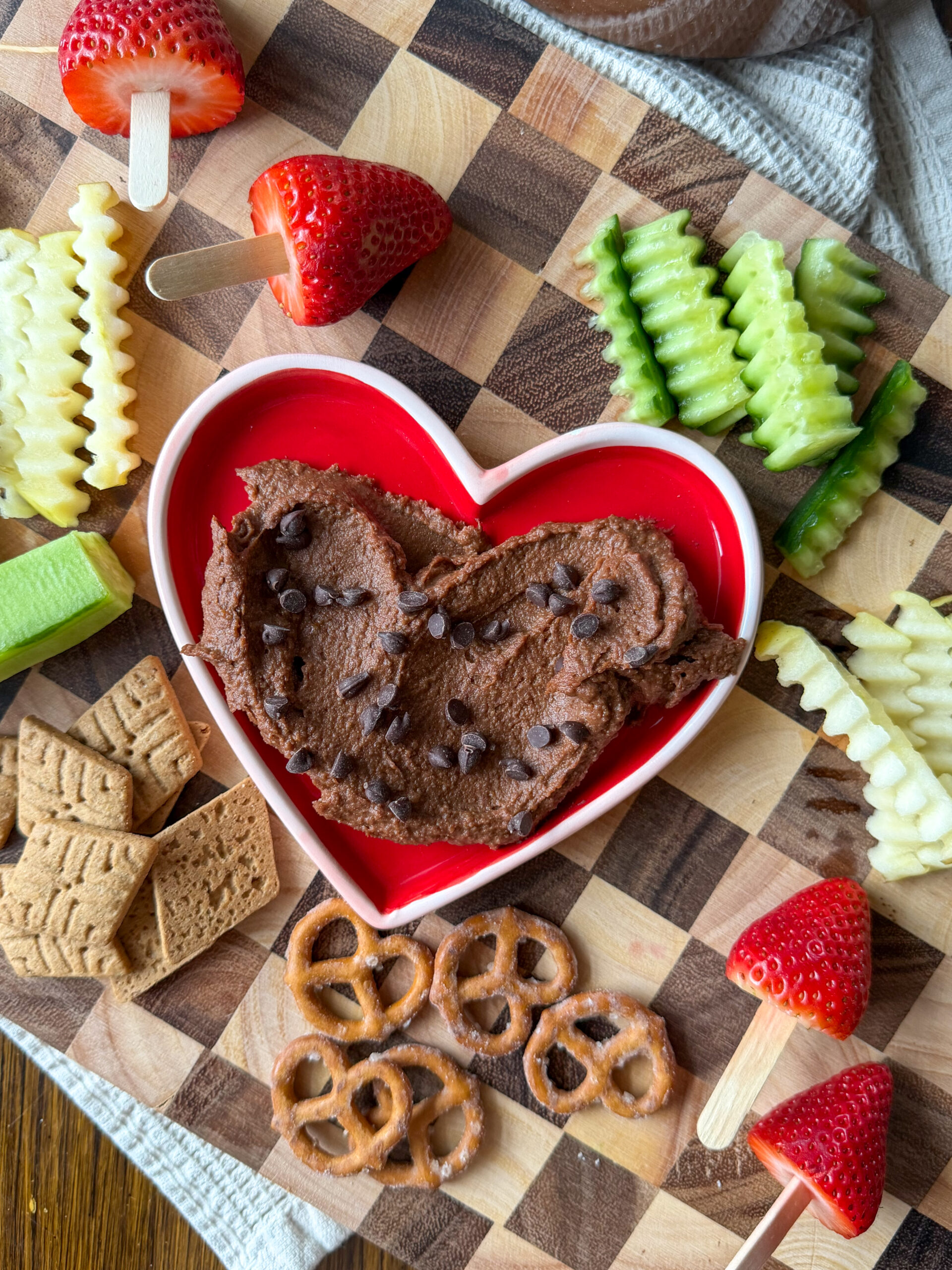
Cucumbers are one of the most accepted vegetables for toddlers because they're mild flavor, high water content, cool temperature. Crinkle cutting them into sticks adds ridged texture that makes self-feeding way easier. Serve with hummus, plain Greek yogurt dip, ranch dip, or cream cheese for a protein and fat boost alongside.
Nutrition: Cucumbers provide vitamin K, potassium, and hydration. The real nutrition win here is the dip! Pairing with hummus or Greek yogurt turns a light snack into one with meaningful protein, fat, and calcium.
3. Watermelon Fries + Apple Fries with Yogurt Fruit Dip
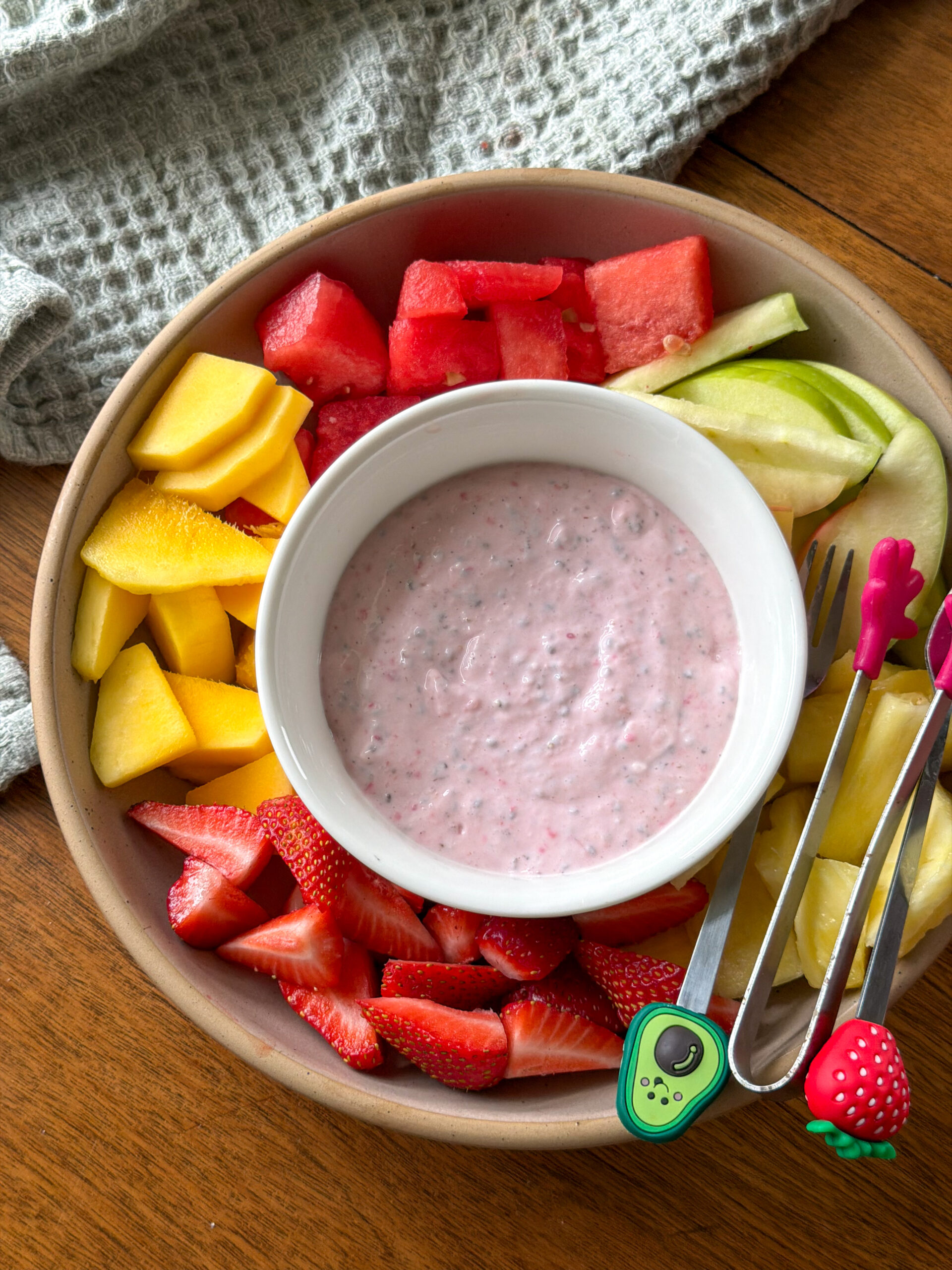
Crinkle cut watermelon into fry-shaped spears or slice apples into thick planks and crinkle cut crosswise. Serve upright in a cup or laid out like actual fries on a plate alongside a small bowl of plain Greek yogurt dip. The presentation alone gets toddlers excited, fruit that looks like fries is immediately interesting.
Nutrition: Watermelon is mostly water with vitamin C, vitamin A, and lycopene. Apple fries add fiber, vitamin C, and natural sweetness. The Greek yogurt dip adds protein and calcium, turning fruit into a genuinely balanced snack with carbs, protein, and fat.
Tip: For the yogurt dip: plain full-fat Greek yogurt, tiny drizzle of honey (ages 1+), and optional sprinkle of hemp hearts or cinnamon on top. Serve in a small cup so they can dip, the dipping action alone increases engagement significantly.
4. Homemade PB&J "Uncrustables"
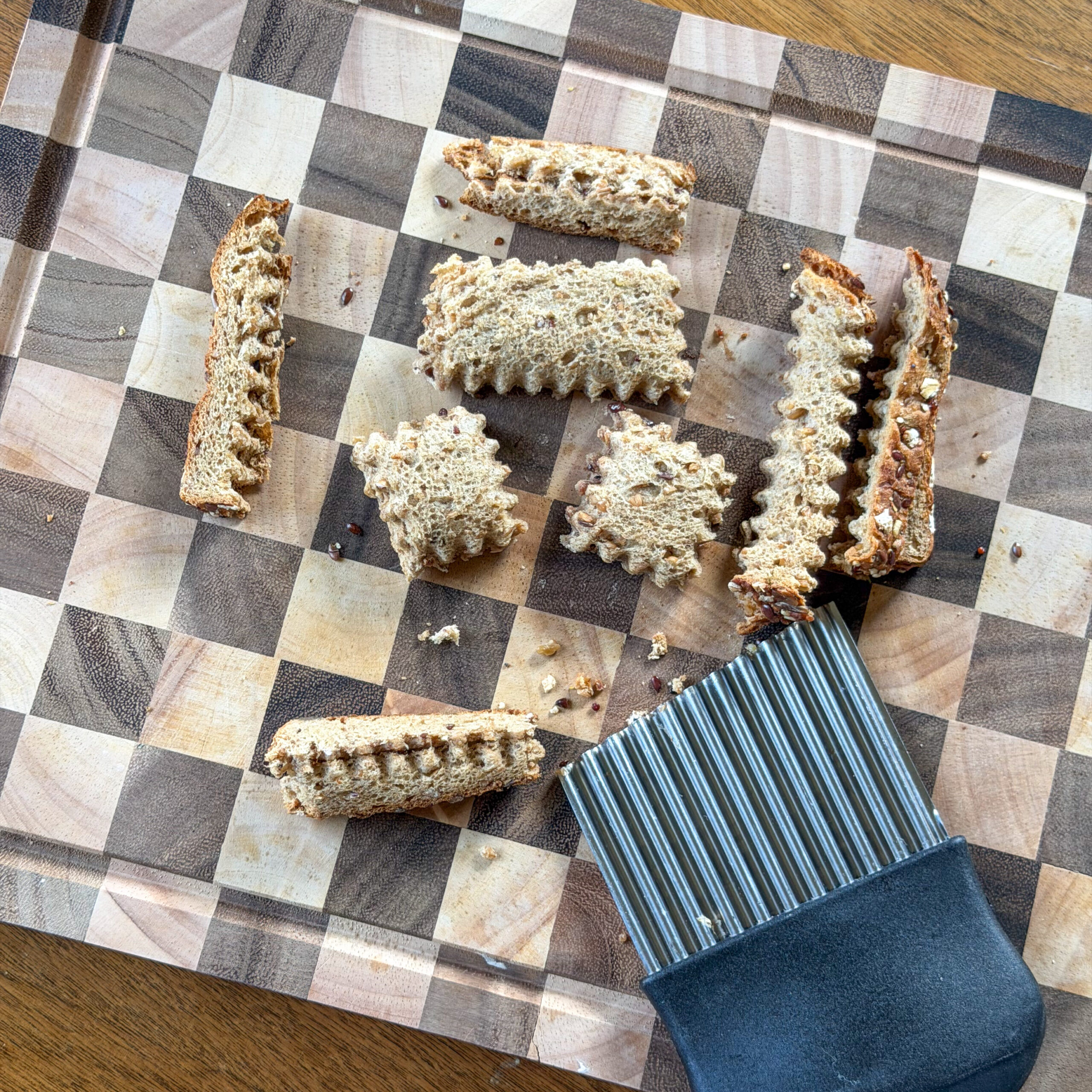
Spread nut butter and a thin layer of jam on whole wheat bread, press the edges together firmly, and crinkle cut into squares or strips. The wavy edges make it feel special and different from a regular sandwich and you control the bread quality, nut butter type, and how much jam goes in.
Nutrition: Whole wheat or whole grain bread bumps fiber vs. white bread. Nut butter adds protein, healthy fat, vitamin E, and iron. Keeping jam to a thin layer manages added sugar without making it a big deal. This is a solid balanced snack with carbs, protein, and fat all in one.
5. Crinkle Cut Pizza Strips
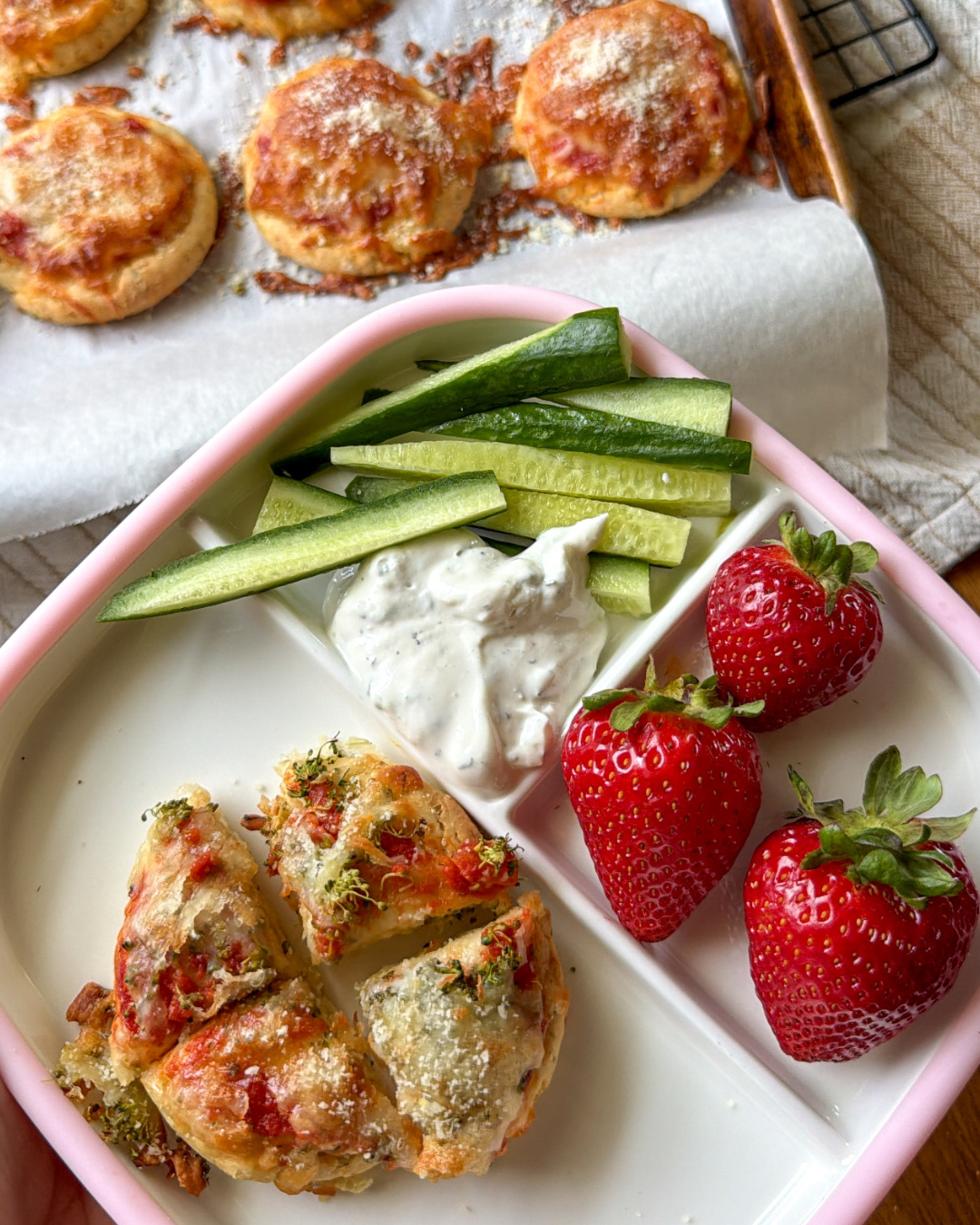
Make mini pizzas on Greek yogurt dough, whole wheat pita, English muffins, or tortillas, then let them cool slightly and crinkle cut into strips. The strips are perfectly sized for toddler hands, easier to bite into than a full slice, and the crinkle edge gives them something to hold. Add veggies under the cheese so they bake in and become invisible.
Nutrition: Whole wheat base adds fiber. Tomato sauce provides lycopene, vitamin C, and potassium. Mozzarella adds calcium and protein. Add in shredded zucchini, finely chopped broccoli, spinach, or finely diced mushrooms under the cheese. They disappear completely when baked and add vitamins, fiber, and iron without changing the flavor.
Tip: First, shred zucchini finely and press out the moisture with a paper towel before adding it to the pizza. Because of this, it bakes into the cheese completely and adds volume, fiber, and folate without anyone knowing it's there.
6. Grilled Cheese Crinkle Strips to Dip in Lentil Tomato Soup
Make a regular grilled cheese on whole wheat bread, let it cool slightly, then crinkle cut into strips for dipping. The soup is the nutrition upgrade: blend cooked red lentils directly into your tomato soup before serving. They disappear completely and add protein, iron, and fiber without changing the flavor or color at all.
Nutrition: Grilled cheese gives protein, fat, and calcium. Whole wheat bread adds fiber. Red lentils in the soup add plant-based protein (about 9g per half cup cooked), iron (about 3mg per half cup), and fiber making what looks like a simple tomato soup one of the most nutritionally complete toddler meals you can serve.
Tip: Red lentils are the best for blending into soup, they break down completely and turn creamy without needing a high-powered blender. Add half a cup of cooked red lentils per 2 cups of tomato soup, blend smooth, and nobody will ever know! This trick works in butternut squash soup and pureed veggie soups too.
7. Cheese Fries
Take a block of full-fat cheddar, gouda, or colby jack and crinkle cut into thick fry shapes. That's it. Cold cheese fries are one of the most universally accepted toddler foods and the crinkle shape makes them look playful and fun. Serve on their own or alongside a dip.
Nutrition: Full-fat cheese is one of the best sources of calcium, protein, and fat for toddler's bone development and brain growth. One ounce of cheddar has about 7g protein, 9g fat, and 200mg calcium. This is not a snack to feel guilty about.
Tip: Use cheese fries as your guaranteed accepted food on the plate. Serve alongside something newer or less accepted their presence makes the meal feel safe, which makes a toddler more likely to engage with the rest of what's there.
8. French Toast Sticks
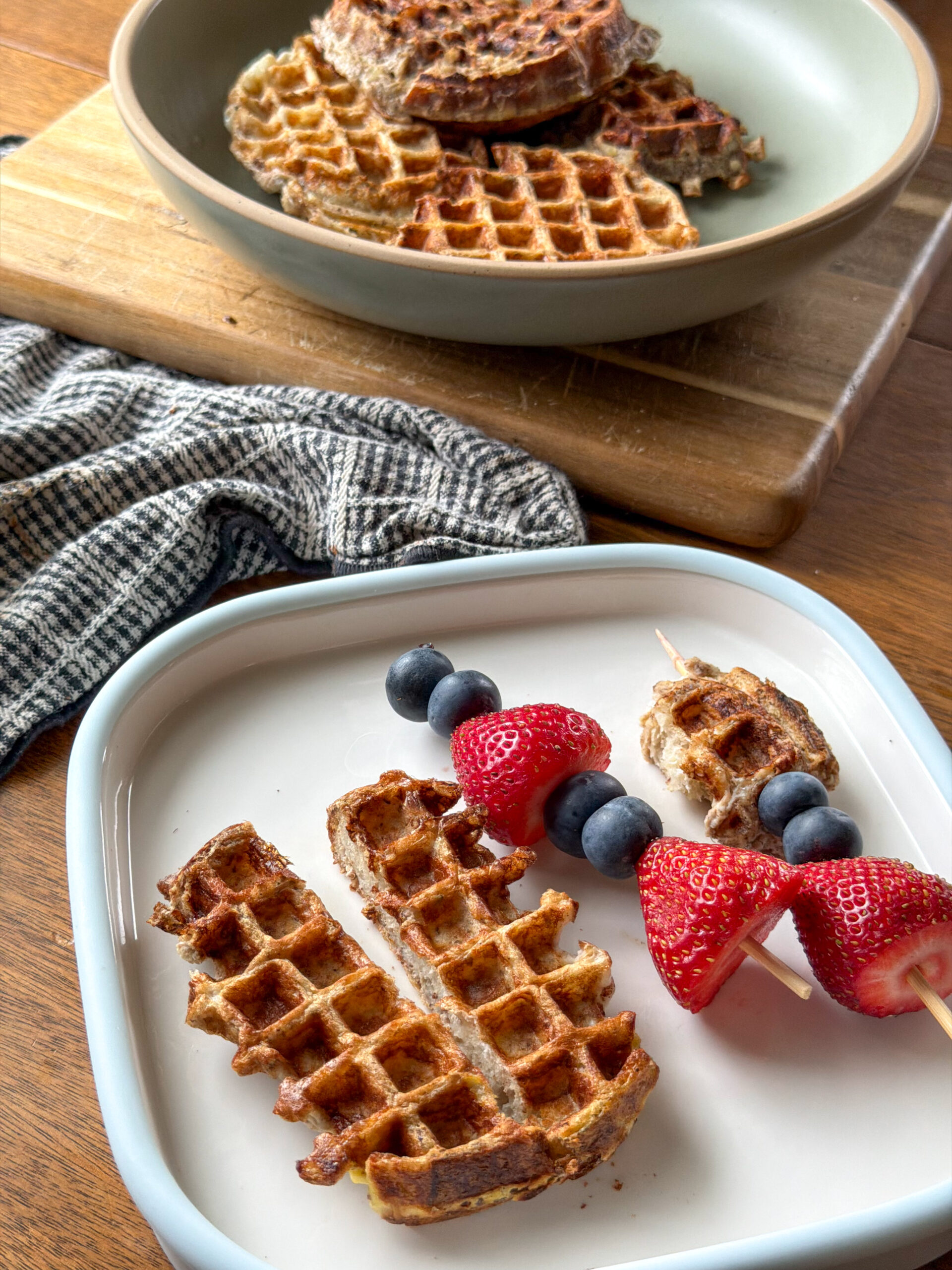
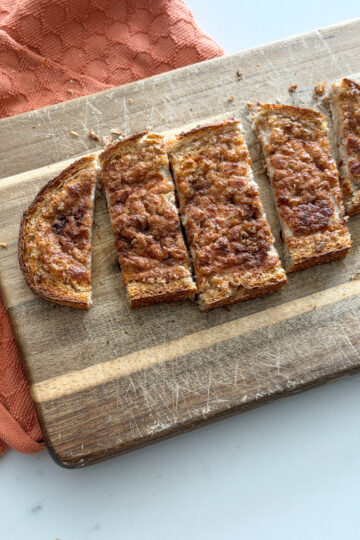
Make french toast as usual (egg, whole milk, cinnamon, splash of vanilla), cook in butter, then crinkle cut into strips while still slightly warm. The crinkle cut gives the edges a little extra texture and makes them look like a fun restaurant version. Serve with a small bowl of Greek yogurt for dipping instead of syrup or both.
Nutrition: Eggs add protein, choline (critical for brain development), vitamin D, and iron. Whole milk adds fat and calcium. Whole wheat bread bumps fiber. Cooking in butter adds fat-soluble vitamins. This is genuinely one of the most nutrient-dense breakfast options for toddlers and it takes 10 minutes.
Tip: Make a big batch and freeze the strips in a single layer, then transfer to a bag. Reheat in the air fryer or toaster oven straight from frozen, 3-4 minutes at 375°F.
9. Butternut Squash Zig Zags
Peel butternut squash, slice into planks, and crinkle cut into thick zig zag shapes. Toss in olive oil and a little cinnamon or just salt, then roast at 400°F for 20-25 minutes until caramelized and fork-tender. The natural sweetness that develops in the oven makes these genuinely delicious, not just "toddler tolerated."
Nutrition: Butternut squash is packed with beta-carotene (vitamin A), vitamin C, potassium, magnesium, and fiber. The olive oil boosts fat-soluble vitamin absorption. A half cup of roasted butternut squash covers over 100% of a toddler's daily vitamin A needs.
Tip: The zig zag shape holds caramelization better than a straight cut because there's more surface area, more browning, more flavor, more likely your toddler actually eats it. This is the most underrated crinkle cutter application on this list.
10. Crispy Tofu Fries
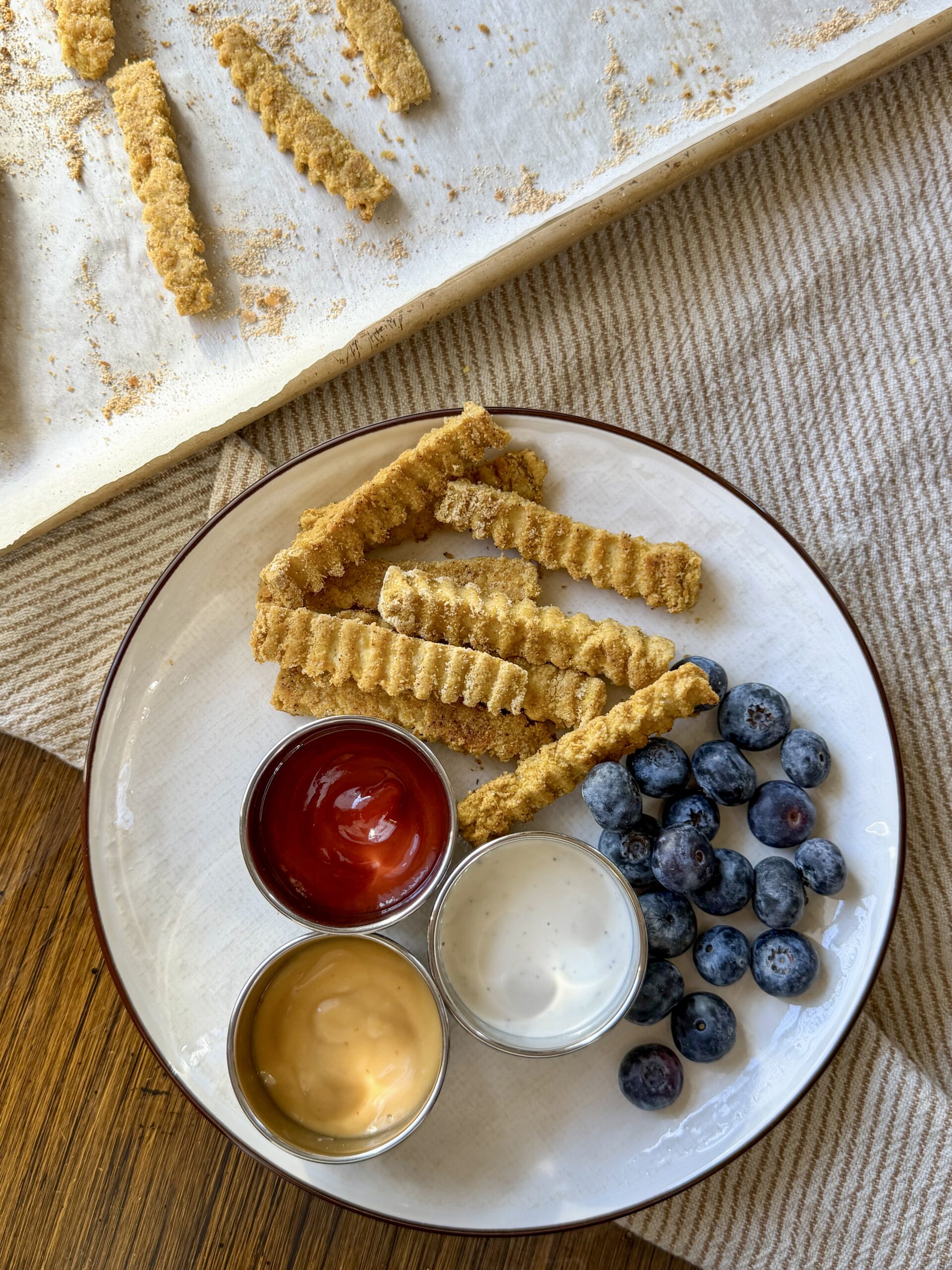
Press extra-firm tofu to remove moisture, crinkle cut into thick fry shapes, toss in a little olive oil and soy sauce (or coconut aminos), and bake or air fry at 400°F for 20-25 minutes until golden and crispy on the edges. The crinkle cut gives more surface area for crisping, which makes a huge difference in texture and is usually the thing toddlers who reject tofu are actually objecting to.
Nutrition: Tofu has about 10g of protein per half cup, plus calcium (especially calcium-set tofu), iron, and all essential amino acids. It's a complete protein, which is rare in plant foods. For families eating less meat, this is a genuinely valuable food to get into rotation.
Tip: The moisture-pressing step is non-negotiable. Press for at least 15-20 minutes, wrap in a clean kitchen towel and put something heavy on top. Wet tofu steams instead of crisps, and steamed tofu is why so many kids reject it. Press it properly and it completely transforms.
11. Banana Coins + Avocado Chocolate "Frosting"
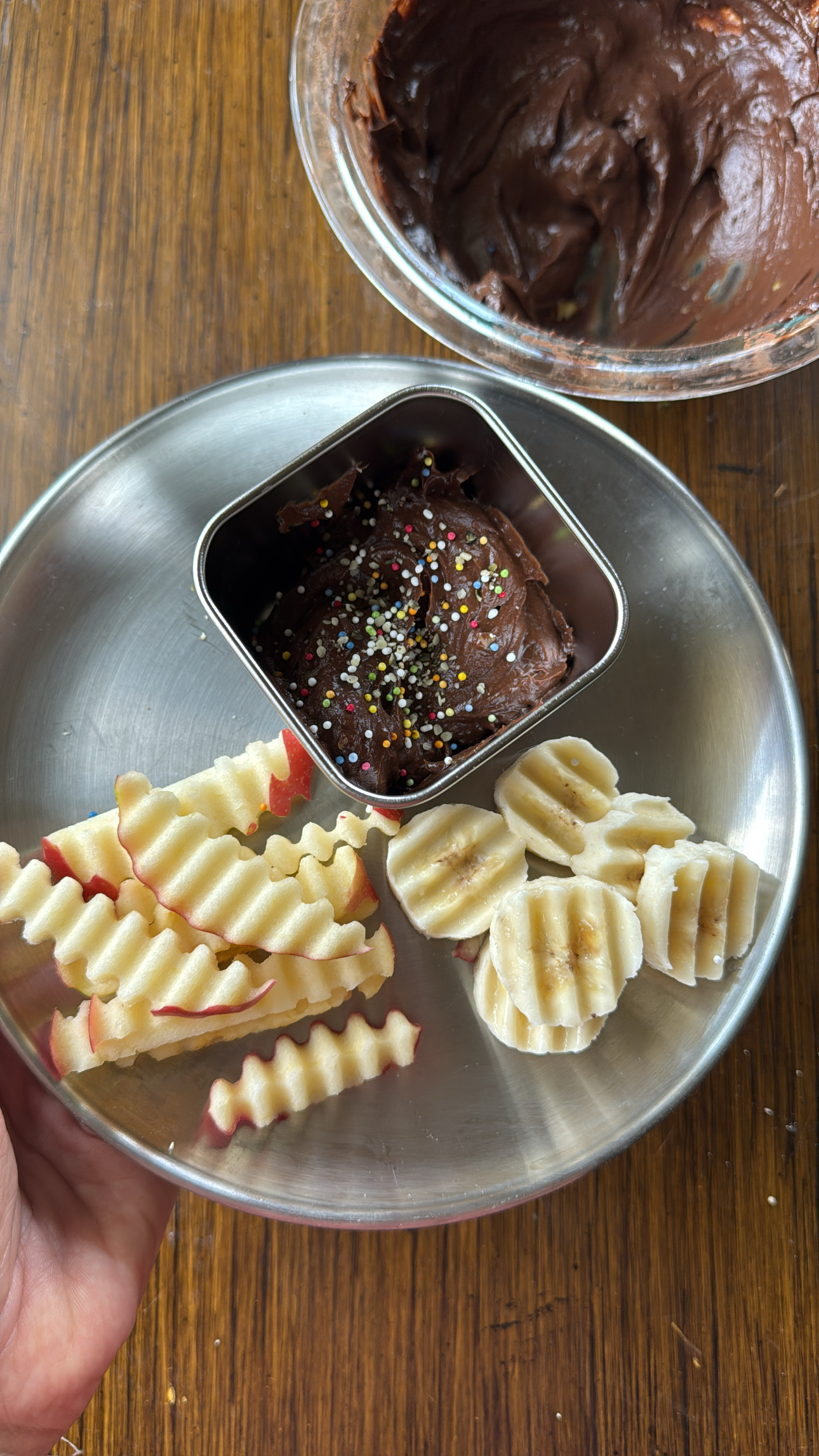
Slice bananas crosswise into rounds, then crinkle cut each round into halves or quarters depending on age. The ridged surface makes them much easier to pick up, since bananas are notoriously slippery for little fingers.
Nutrition: Bananas provide potassium, vitamin B6, vitamin C, and natural sugars for quick energy. Dip in nut butter or plain Greek yogurt for added protein and fat. Turning a simple fruit snack into a balanced one.
Tip: Use slightly underripe bananas for crinkle cutting, they hold their shape much better. Very ripe bananas mush rather than slice cleanly. Save the overripe ones for smoothies or muffin batter.
12. Avocado Slices Tossed in Hemp Hearts or Ground Flaxseed
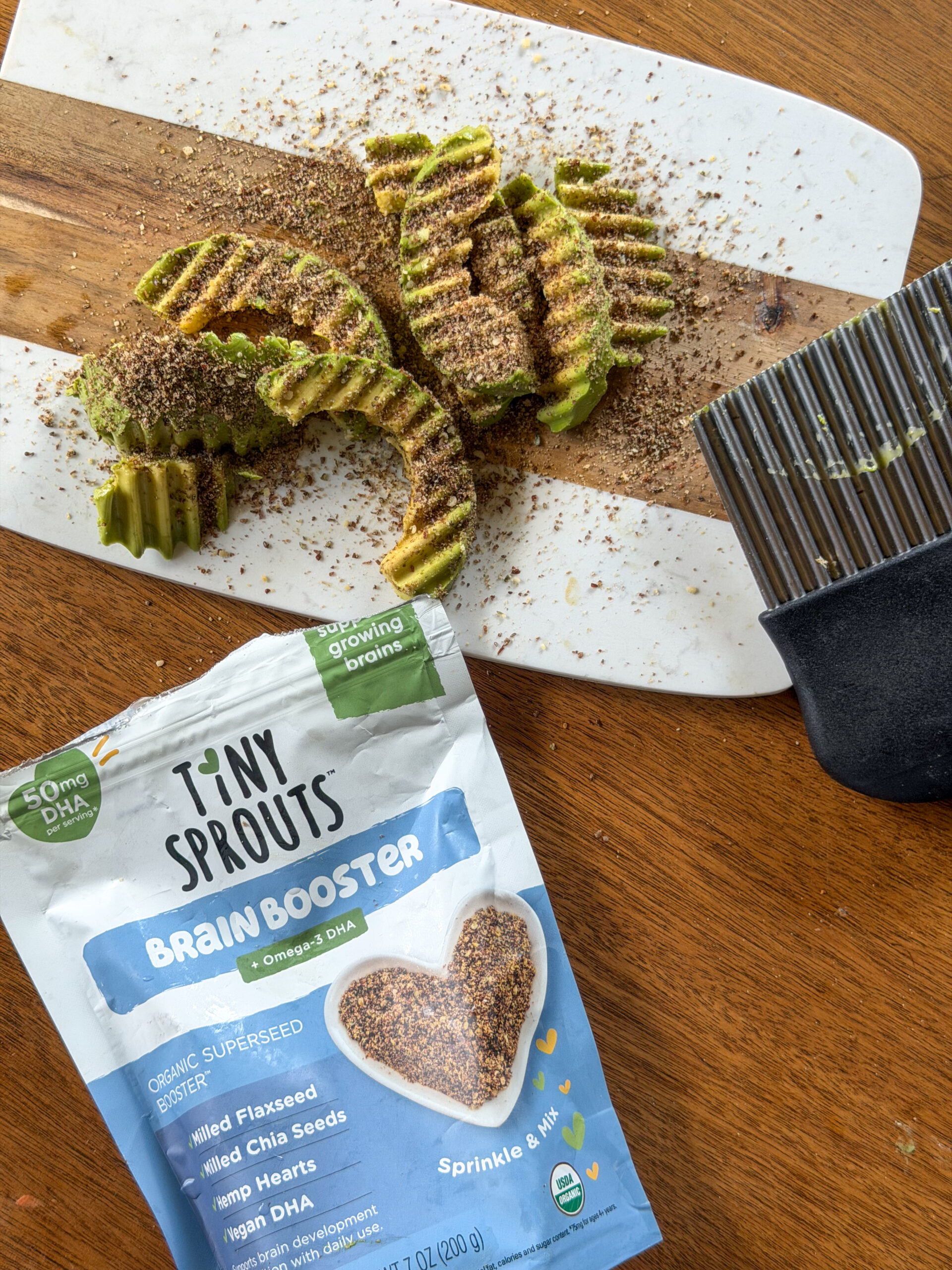
Crinkle cut avocado into slices or spears, then toss lightly in hemp hearts or ground flaxseed. The ridges grip the coating and the texture adds interest to what is otherwise a very slippery, hard-to-pick-up food. This is the simplest nutrition upgrade on this entire list.
Nutrition: Avocado brings healthy monounsaturated fat, fiber, folate, potassium, and vitamin K. Hemp hearts add complete protein, omega-3 fatty acids, and 1.3mg of iron per tablespoon (more than a much larger serving of spinach!). Ground flaxseed adds additional omega-3s, fiber, and iron. One of the most nutrient-dense finger foods you can serve a toddler.
Tip: For best iron absorption, pair this snack with a vitamin C source on the side like orange slices or strawberries. As a result, the non-heme iron in the hemp hearts absorbs much more efficiently.
13. Quesadilla Strips
Make a regular cheese quesadilla, let it cool slightly so it firms up, then crinkle cut into strips instead of triangles. The ridged edges hold together better and make the strips easier for little hands to grab without everything falling apart. Add shredded chicken, black beans, or smashed avocado inside for an easy nutrition boost.
Nutrition: A cheese quesadilla on whole wheat tortilla gives protein, fat, calcium, and fiber. Black beans inside add plant-based protein, fiber, and iron. Serve with sour cream or guacamole on the side, both add healthy fat and make dipping more fun.
Tip: The crinkle cut helps with structural integrity, the ridged edges are less likely to flop and lose their filling mid-bite. Practical and adorable, which is always the goal.
A Few More Ways You Can Use Your Crinkle Cutter
- Turn waffles into dippable crinkle sticks
- Cut avocado toast into crinkle strips for little hands
- Make crinkle-cut omelet strips for breakfast
- Turn sheet pan eggs or omelet into crinkle fingers
- Cut sandwiches into crinkle "fries" instead of triangles
- Make crinkle-cut turkey and cheese roll-ups
- Turn pita bread into crinkle dippers for hummus
- Make crinkle-cut breakfast bars for snack trays
- Cut hard-boiled eggs into crinkle slices
- Turn sweet potato toast into crinkle fingers
- Cut deli turkey into crinkle ribbons for lunchboxes
- Make crinkle-cut tortilla chips from baked tortillas
- Turn cheese slices into crinkle squares for snack boards
- Cut homemade pop tarts into crinkle strips
- Make crinkle-cut fruit leather ribbons
- Cut mini pancakes into crinkle dippers for yogurt
- Cut bagels with cream cheese into crinkle sticks
- Make crinkle-cut pear spears for dipping
- Turn mango slices into crinkle sticks
The Best Crinkle Cutters for Toddlers
Not all crinkle cutters are created equal and I say that as someone who has gone through a few. Here is what you actually need:
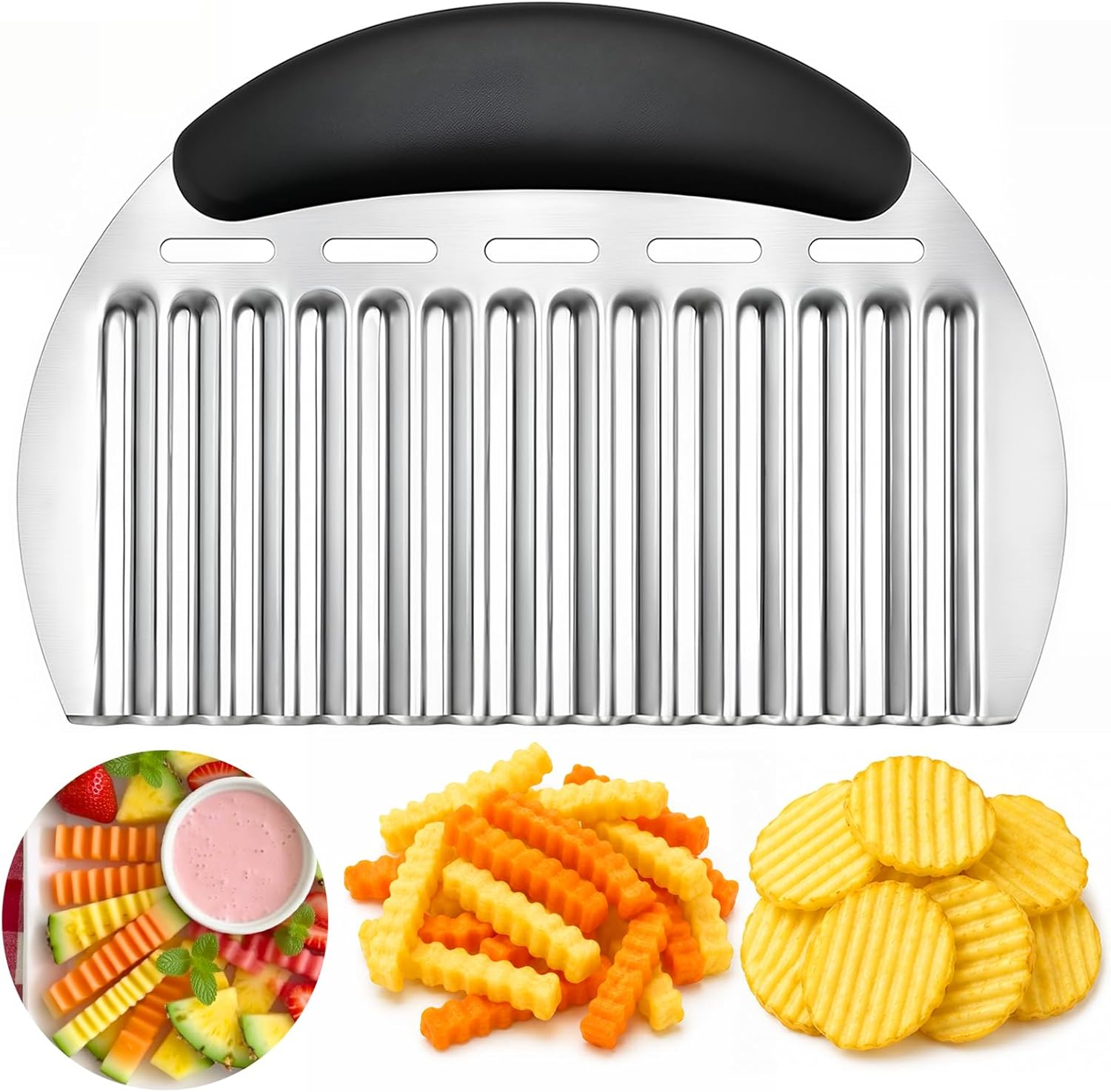
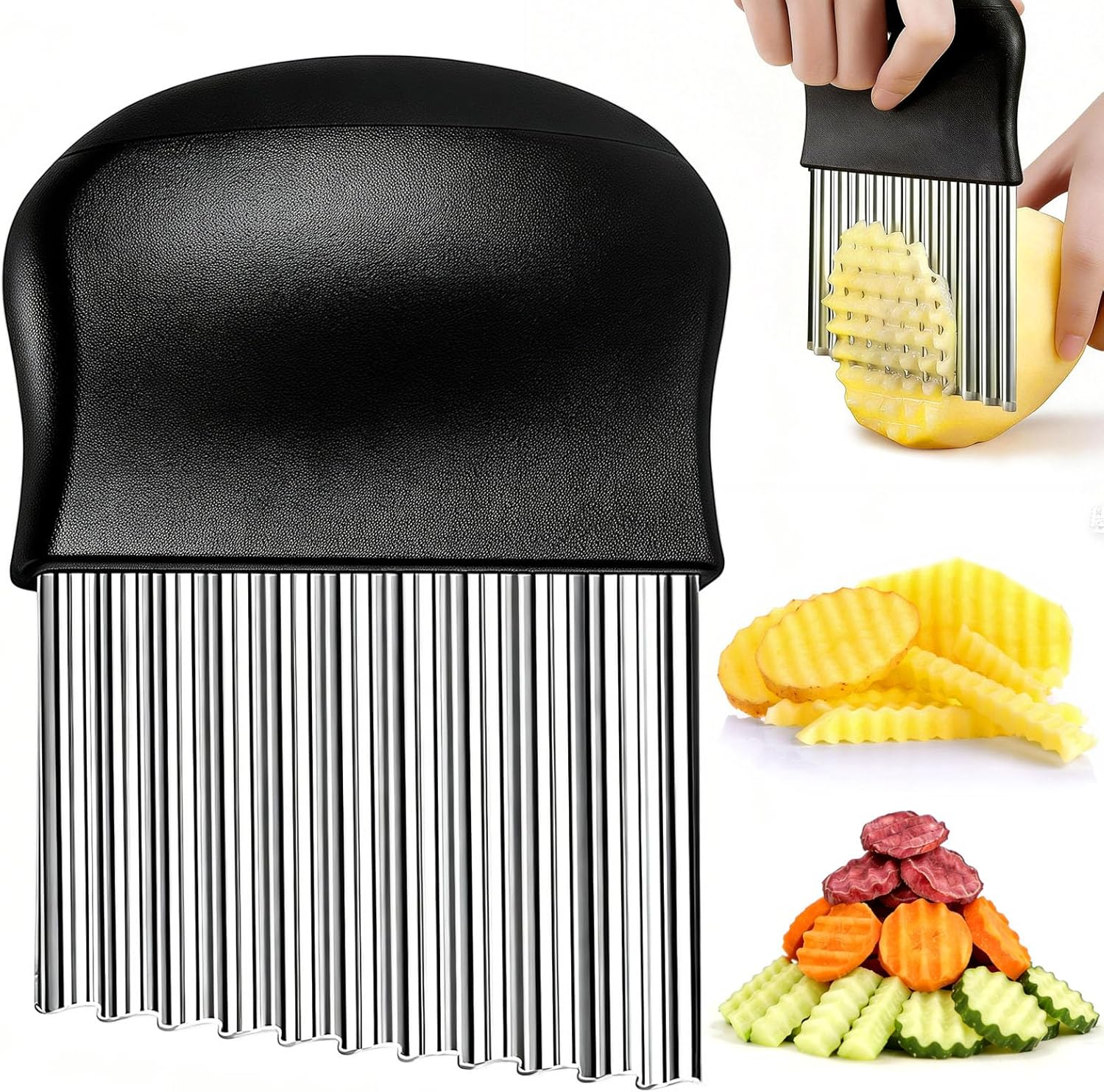
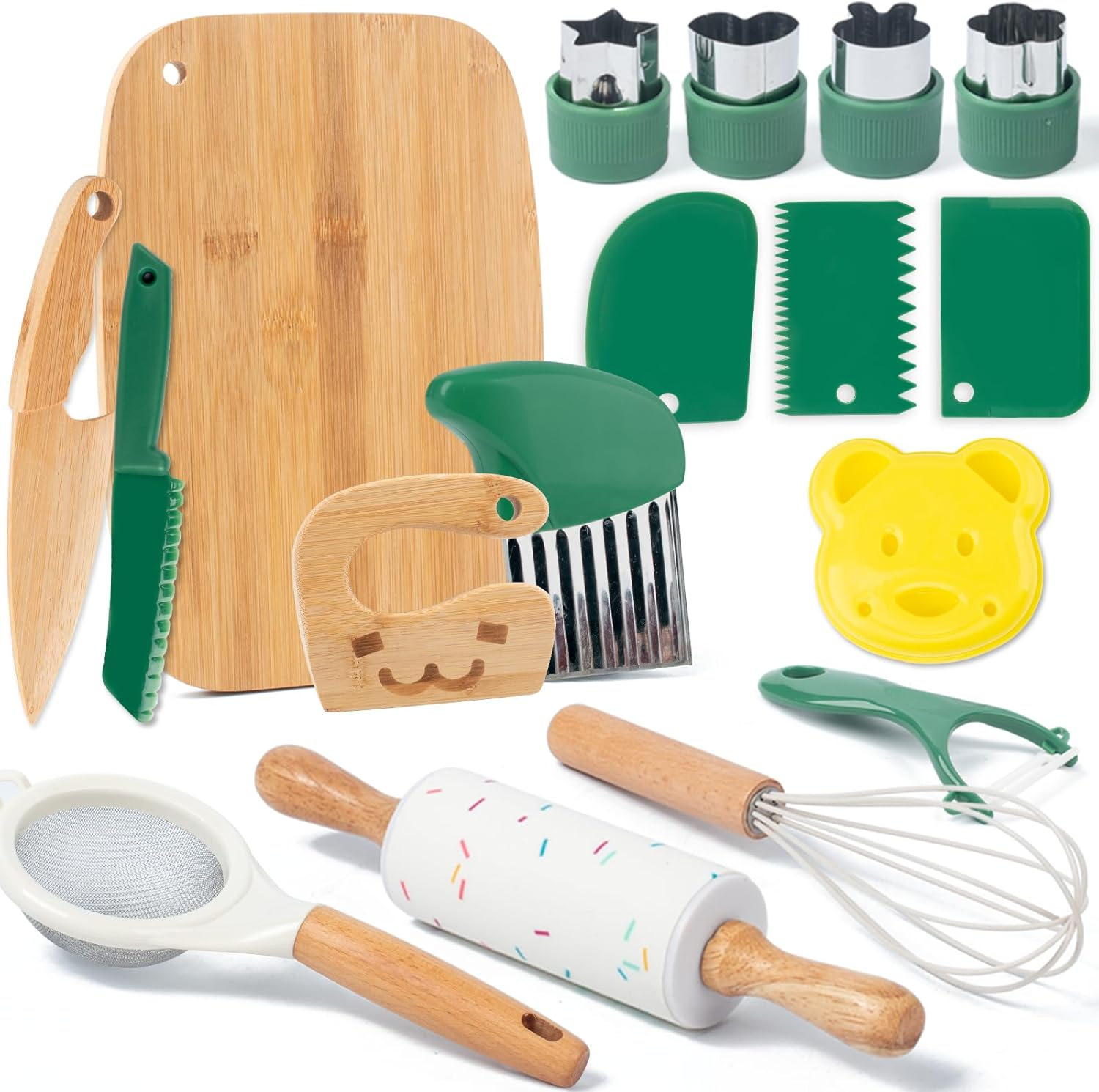
When looking for a good crinkle cutter, there are a few things worth paying attention to. First, look for a sturdy stainless steel blade that can handle harder vegetables like carrots and butternut squash without slipping. In addition, a comfortable grip handle makes a big difference since it gives you enough leverage to press down cleanly. Overall, just something that feels solid in your hand because you are going to use it a lot.
The crinkle cutter I use and personally love runs about $8-10 and is available on Amazon and at most kitchen stores. On top of that, it's easy to clean and the blade stays sharp. There are so many options out there, so honestly they all do the job. Just look for something with a sturdy blade and a comfortable grip!
One Last Thing
These crinkle cutter ideas for toddlers aren't going to fix picky eating overnight and I want to be real with you about that. Some days your toddler will refuse crinkle cut carrots just as hard as regular carrots and that is completely normal. However, what it does do is give you one more tool to make food feel fun, approachable, and worth trying. And in the world of toddler feeding, that matters.
Keep offering. Keep it low pressure. Keep showing up at the table without making food a bigger deal than it needs to be. The long game is real and it works!
Crinkle Cutter Ideas for Toddlers: FAQ
What age can toddlers use a crinkle cutter?
Most toddlers can start helping with a crinkle cutter around age 2.5 to 3 with close supervision. The motion is simple: both hands on the handle, press straight down and soft foods like banana and cucumber are great starting points. Always supervise and start with foods that don't require much force.
Why do these crinkle cutter ideas help picky eaters?
The short answer is novelty. Because toddlers are highly responsive to how food looks and feels, a food they have refused before can look and feel completely different in crinkle form. In fact, it can be different enough that they are willing to interact with it again. That interaction, even without eating, counts as an exposure. As a result, repeated exposures over time are what build food acceptance.
Can I use these crinkle cutter ideas for toddlers for baby led weaning?
Yes, it is actually one of the best tools for BLW! The ridged edges add grip to slippery foods like avocado, banana, and soft-cooked vegetables that are otherwise really hard for little hands to pick up. Just make sure foods are cooked to the right softness for your baby's age and always supervise.
What foods work best with a crinkle cutter?
Pretty much anything firm enough to hold its shape works well! For example, some of the best options for toddlers include carrots, cucumbers, apples, watermelon, butternut squash, cheese, tofu, zucchini, cooked beets, banana, avocado, bread and sandwiches, and quesadillas. In general, if it can be sliced, it can probably be crinkle cut.
Do crinkle cut vegetables taste different?
Not really! But they do roast slightly differently because the ridged surface creates more surface area, which means more caramelization and better browning in the oven. So crinkle cut roasted veggies actually do taste a little better than straight cut ones. More surface area equals more flavor, which is a win when you are trying to get a toddler to eat vegetables.
References
Wardle, J., Herrera, M. L., Cooke, L., & Gibson, E. L. (2003). Modifying children's food preferences: The effects of exposure and reward on acceptance of an unfamiliar vegetable. European Journal of Clinical Nutrition, 57(2), 341-348. https://pubmed.ncbi.nlm.nih.gov/12571671
Birch, L. L., & Marlin, D. W. (1982). I don't like it; I never tried it: Effects of exposure on two-year-old children's food preferences. Appetite, 3(4), 353-360. https://pubmed.ncbi.nlm.nih.gov/7165490
Satter, E. (2000). Child of mine: Feeding with love and good sense. Bull Publishing. https://www.ellynsatterinstitute.org
For nutrition data referenced throughout, all food values were sourced from the USDA FoodData Central database. https://fdc.nal.usda.gov
Toddler Snack Recipes
Looking for toddler snack recipes that are nutrient-dense? Try these:
Toddler Breakfast Ideas
xoxo, toddler dietitian tiff
Disclaimer: This post is for educational purposes only and should not replace individualized medical advice. Every child develops at their own pace, and safe food choices will depend on your little one’s age, chewing ability, and readiness for textures. Always supervise your baby or toddler during meals and adjust food sizes and textures as needed.
Leave a Reply