
If you've been Googling high calorie foods for toddlers at 10pm or shopping different protein shakes because your pediatrician flagged your child's weight or you've just watched the scale barely budge for months, this one's for you.
Here's the thing about toddlers: you can't just give them bigger portions. Their stomachs are the size of their fist. Literally. So the strategy isn't necessarily more food (because they can only hold so much volume), it's smarter food. Calorie-dense, nutrient-packed foods that work hard in a small volume so every bite and every sip is doing something for your kid.
As a registered dietitian and mom, I'm going to walk you through the best high calorie foods for toddlers, how much they actually add, the ways to add them to foods your toddler already eats, and at the end a whole food smoothie that outperforms Pediasure on protein and fiber (even has a solid amount of iron). Let's get into it!
Important: If your pediatrician has flagged your toddler's weight, always follow up and ask specifically what they're concerned about. A toddler at the 5th percentile who has always been at the 5th percentile is very different from a toddler who has dropped two major percentile lines. Context matters a lot and when in doubt, ask for a referral to a pediatric registered dietitian who can look at the full picture.
Why Calorie Density Matters More Than Portion Size
Between ages 1-3, toddler growth slows compared to infancy and their appetite drops to match. A baby who gained 14-15 lbs in year one might only gain 4-5 lbs over their entire second year. That's normal. But it also means their intake looks tiny compared to what we think they should be eating, which sends a lot of parents into a panic.
The answer isn't forcing more bites (which honestly backfires). It's making the bites they do take count more. Fat has 9 calories per gram vs. 4 calories per gram for protein and carbs, which makes it the most powerful calorie-density tool you have. A single teaspoon of olive oil adds 40 calories to a bowl of pasta with zero change in volume. That's the game!
According to the American Academy of Pediatrics (AAP) and Dietary Guidelines:
- Ages 1-3: 1,000-1,400 calories per day
- Ages 4-8: 1,200-1,600 calories per day
The High Calorie Foods for Toddlers Cheat Sheet
Before we get into how to use these, here's what the actual calorie counts and what each food brings beyond just calories:
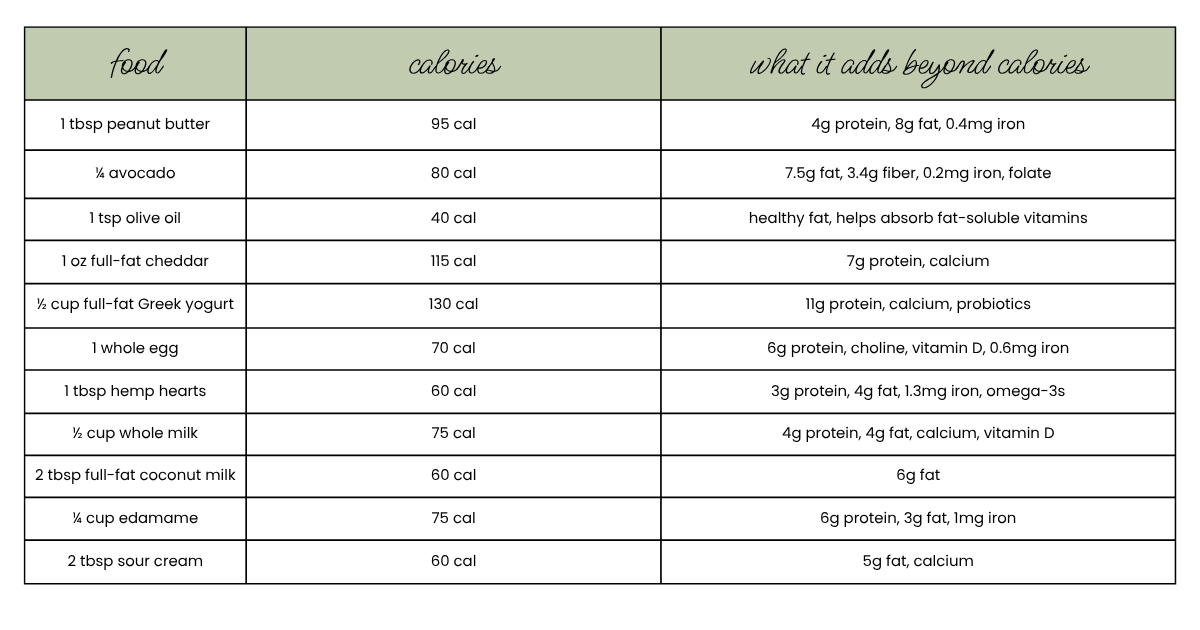
Notice that most of these high calorie foods for toddlers are pulling double or triple duty, they're not just adding calories, they're adding protein, iron, healthy fat, fiber, or all of the above. That's exactly what we want. We're not chasing "empty calories" here, because again, toddlers have limited space that fits in those little tummies!
The Best High Calorie Foods for Toddlers (And How to Use Them)
1. Healthy Fats - Your Best Friend
Fat is the most calorie-dense macronutrient and the easiest to add invisibly to foods your toddler already eats. This is where you start.
Butter and olive oil: Add a teaspoon of butter or olive oil to every savory meal - pasta, scrambled eggs, rice, mashed potatoes, roasted veggies, soups. You're adding 35-40 calories per teaspoon with zero change in flavor or volume. Do this at three meals a day and you've added up to 120 extra calories without changing a single food on the plate.
Avocado: A quarter of an avocado adds about 60 calories, 5g of healthy fat, and 2.5g of fiber. It's mild, creamy, and surprisingly accepted by a lot of picky eaters - especially as a dip, in a smoothie, popsicle, chocolate pudding, or smashed on toast. Half an avocado bumps that to 120 calories. Frozen avocado cubes (Trader Joe's and most grocery stores carry them) are a fantastic smoothie add-in.
Full-fat dairy everywhere: Whole milk, full-fat Greek yogurt, full-fat cheese, whole milk cottage cheese, cream cheese, sour cream. The AAP recommends whole milk for ages 1-2 specifically because of the fat content. After age 2 you can switch to 2%, but in the weight gain season, stay full-fat across the board (tbh I still offer whole milk to my 3 year old).
2. Nut Butters - Protein + Fat in One
Two tablespoons of peanut butter has about 190 calories, 8g of protein, 16g of fat, and a little iron. It's one of the most calorie-dense whole foods you can offer a toddler and it pairs with almost everything: crackers, toast, muffins, banana slices, apple slices, stirred into oatmeal, or blended into a smoothie.
If you're nut-free, sunflower seed butter has an almost identical nutrition profile and works exactly the same way. Almond butter is another great option with a slightly higher fat content. Cashew butter is also amazing with more of a neutral flavor!
Tiff Dietitian's tip: Swap regular yogurt for Greek yogurt and stir in a tablespoon of nut butter. You've just turned a 90-calorie snack into a 185-calorie snack with nearly double the protein. Most toddlers won't notice the difference if you add a small drizzle of honey (ages 2+).
3. Eggs - The Underrated Powerhouse
One egg has 70 calories, 6g of protein, healthy fat, choline for brain development, vitamin D, and iron. Scramble them in butter and add shredded cheese on top and you've got close to 200 calories in a toddler-sized portion.
Add eggs wherever you can: scrambled as a main, mixed into fried rice, stirred into pasta, baked into muffins or pancakes. They're a workhorse ingredient for calorie density!
And if you're like a lot of parents I work with, having a toddler on an egg-strike then here are some ideas to try:
- easy egg crepe + berries & nut butter
- french toast + peaches & full-fat yogurt
- egg waffles (sweet or savory) + peaches
- egg quesadilla or taco
- egg muffin bites + banana
4. Full-Fat Dairy - Calories and Protein in Every Bite
Full-fat Greek yogurt: Half a cup has about 90 calories and 9g of protein. That's nearly 70% of a toddler's daily protein needs in one snack. Add fruit, a drizzle of honey, or nut butter and you have a solid 150-200 calorie snack with no effort.
Full-fat cheese: One ounce of cheddar has 115 calories and 7g of protein. Shred it on everything: pasta, eggs, rice, soup, quesadillas, veggies. It melts, it blends in, and most toddlers love it.
Whole milk cottage cheese: Half a cup has about 110 calories and 13g of protein - that's more protein than most adults eat in a snack. Blend it smooth for texture-sensitive kids and serve it as a dip for crackers or veggie straws
Cream cheese: 50 calories per tablespoon, smooth, mild, and spreadable on pretty much anything. Toast, crackers, bagels, stirred into mashed potatoes. An easy calorie boost!
5. Hemp Hearts - The One Ingredient Most People Are Sleeping On
Y'all know I LOVE my hemp heart "sprinkles" and it's actually wild how nutrient-dense these little seeds are! One tablespoon of hemp hearts adds 55 calories, 3.2g of complete protein (all essential amino acids), 4.9g of healthy fat, and 1.2mg of iron. They have almost no flavor, blend completely smooth into smoothies, and can be stirred into oatmeal, yogurt, or pancake batter without anyone noticing.
That 1.2mg of iron per tablespoon is genuinely impressive. It's more than what you'd get from a much larger serving of spinach!
6. Whole Milk - Make Every Sip Count
Whole milk (not 2%, not skim) is the AAP recommendation for ages 1-2 for a reason, the fat content supports brain development and the calorie density helps small appetites meet their needs. One cup of whole milk has 150 calories, 8g of protein, and 8g of fat. That's a meaningful contribution to a toddler's daily intake!
Go beyond just a glass at meals: cook oatmeal with whole milk instead of water, use it in mashed potatoes and mac and cheese, blend it into smoothies, use it in pancake and waffle batter. Every swap from water to whole milk is an invisible calorie upgrade.
It's also wild to think that 16 oz of milk can meet 100% of your toddler's protein needs for the day!
Stuck in food ruts with your picky toddler? Let's chat!
How to Add Calories Without Adding Volume
This is the section parents actually need because the goal isn't to force more food onto the plate. It's to make the food already on the plate work harder.
- The pasta upgrade: Toss cooked pasta in a teaspoon of olive oil or butter before adding sauce. Adds 35-40 calories invisibly. Then add shredded parmesan on top: another 20-25 calories. You just added 60 calories to a bowl of pasta without changing anything visible.
- The oatmeal upgrade: Cook with whole milk instead of water (+75 cal), stir in a tablespoon of nut butter (+95 cal), add a pat of butter (+35 cal), and top with full-fat Greek yogurt (+45 cal). That's a 350+ calorie breakfast most toddlers will eat happily.
- The smoothie upgrade: Smoothies are the single best vehicle for calorie density in toddlers because you can blend in ingredients that would never be accepted on a plate. More on this below.
- The egg upgrade: Scramble eggs in butter (not cooking spray), add shredded cheese while still warm, and serve with a small side of nut butter on toast. Under 10 minutes, close to 250 calories, nearly 15g of protein.
- The yogurt upgrade: Use full-fat Greek yogurt instead of regular yogurt, stir in a tablespoon of nut butter, and add a small drizzle of honey. You've just doubled the protein and nearly doubled the calories of a standard yogurt snack.
- The soup and sauce upgrade: Add a splash of cream, a pat of butter, or a drizzle of olive oil to any soup or sauce before serving. Invisible, and adds 35-100 calories depending on how much you add.
The High Calorie Toddler Smoothie
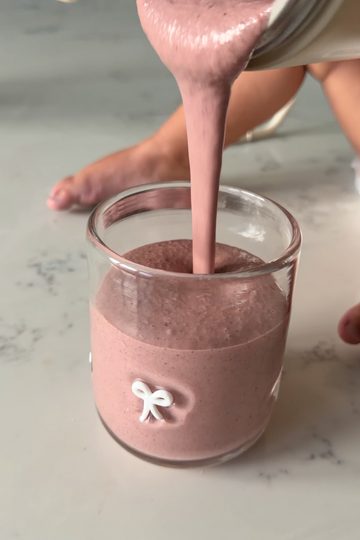
If your pediatrician has mentioned Pediasure, or you've been considering it try this first. This smoothie has more protein, more fat, and more fiber compared to Pediasure Grow & Gain. It's also cheaper per serving and takes two minutes to make!
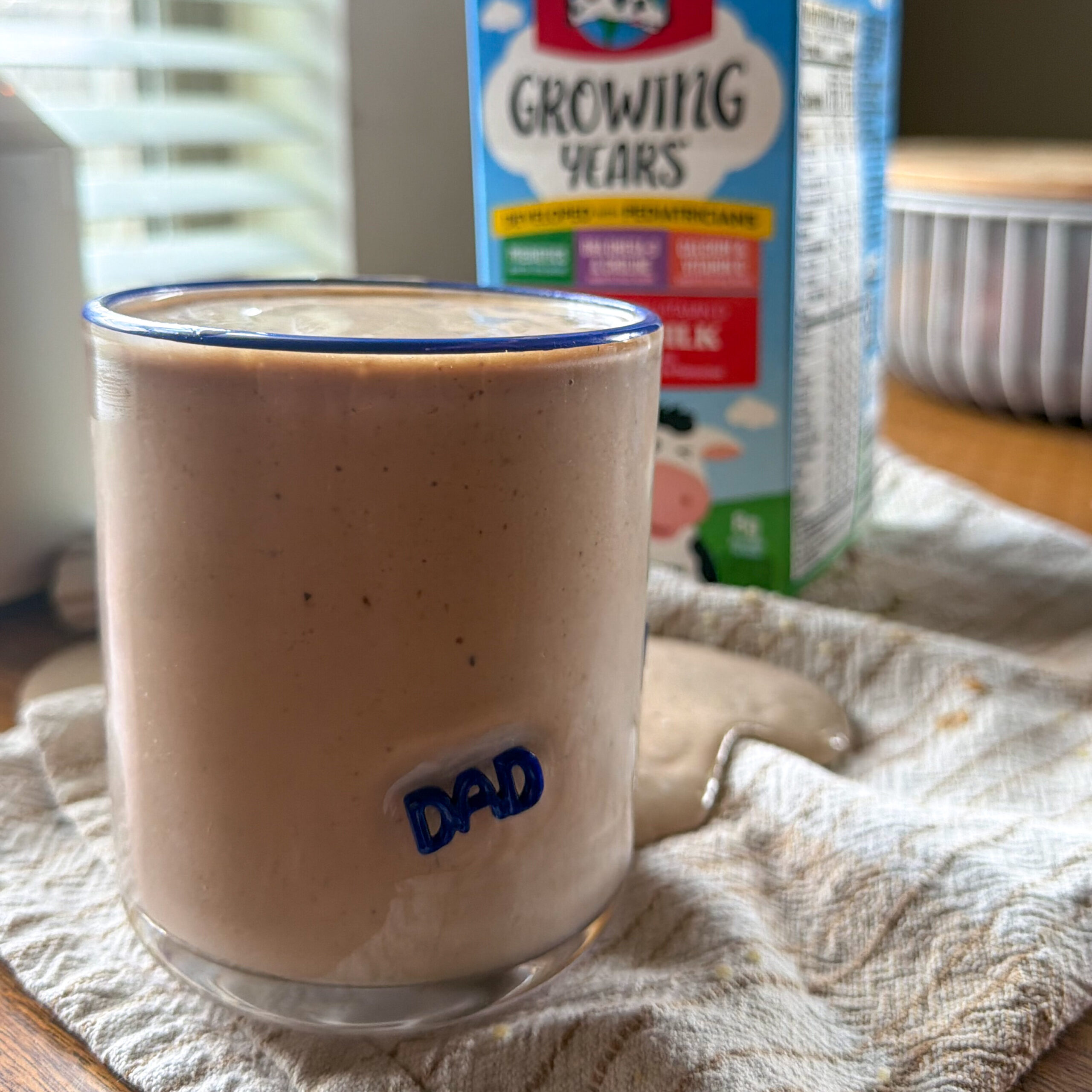
Ingredients
- 1-1.5 cups whole milk or unsweetened soy milk (adjust depending thickness preference)
- ½ cup frozen banana slices (or ½ banana)
- ½ cup frozen avocado cubes (or ½ avocado)
- 1 tablespoon nut butter (peanut, almond, or sunflower seed for nut-free)
- 1 tablespoon hemp hearts
- Optional: 1-2 teaspoon cocoa powder for chocolate version, date or honey/maple syrup for sweetness
Nutrition for the full recipe: approximately 282 calories, 23g carbs, 11g protein, 18g fat, 1.2mg iron (can increase by adding chia seeds or more hemp hearts), 4.5g fiber, and 0g added sugar. Pediasure Grow & Gain (8oz): 240 calories, 33g carbs, 7g protein, 9g fat, 2.7mg iron, 0g fiber, and 9g added sugars.
The one honest caveat: Iron is the one place Pediasure has an edge because it uses ferrous sulfate, which is well-absorbed. This smoothie's iron is non-heme (from hemp hearts, avocado, and nut butter). Pair it with a vitamin C rich food like orange slices, strawberries, or kiwi on the side, to maximize absorption. The banana provides a little vitamin C naturally too.
Texture note: The key to keeping this thin enough for a toddler to sip is the 1.5 cups of milk. Two frozen ingredients together make it pretty thick, the extra milk is what keeps it drinkable. Stick to ½ cup of each frozen ingredient. More frozen banana = smoothie bowl and let them decorate with sprinkles!
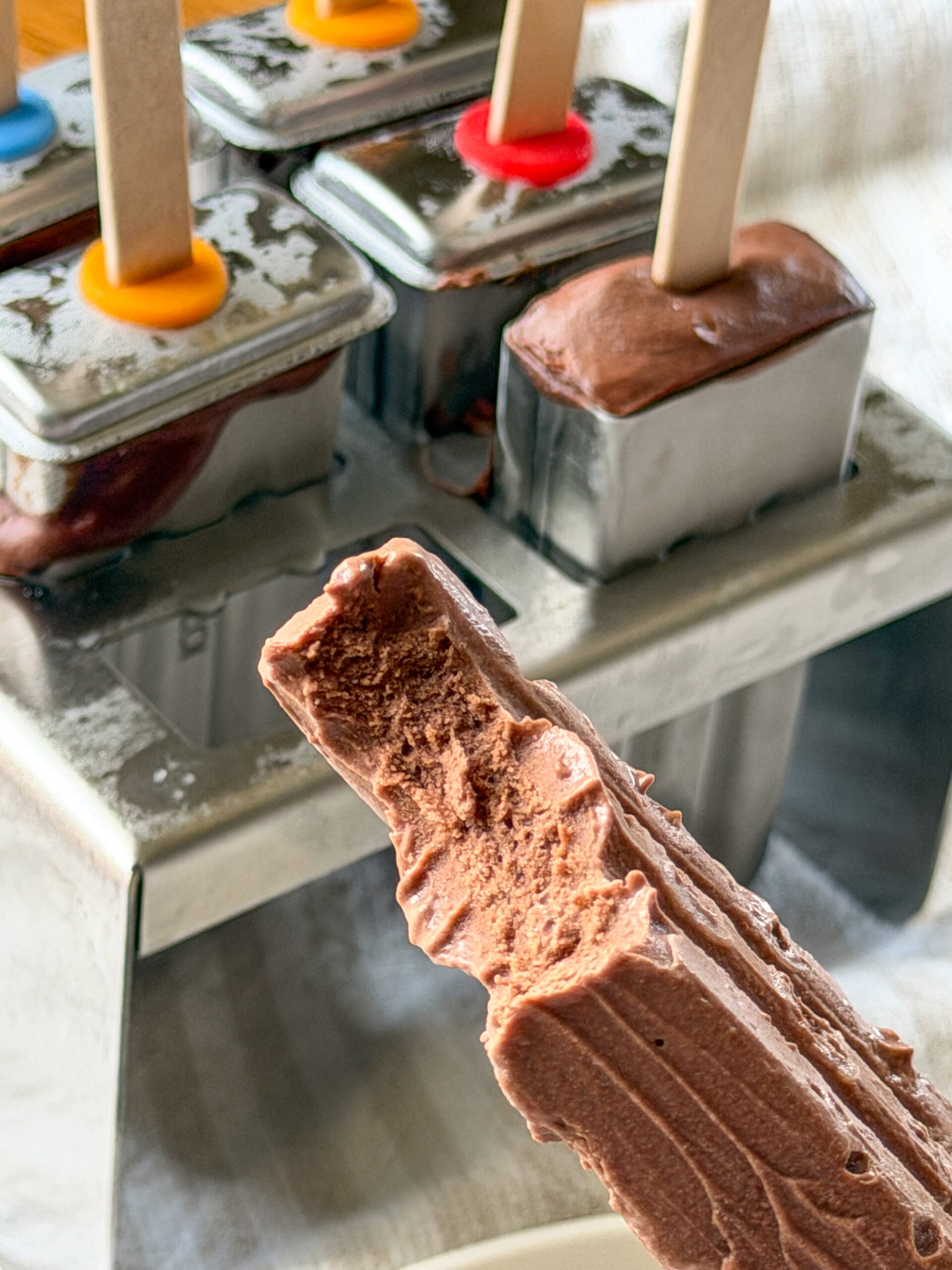
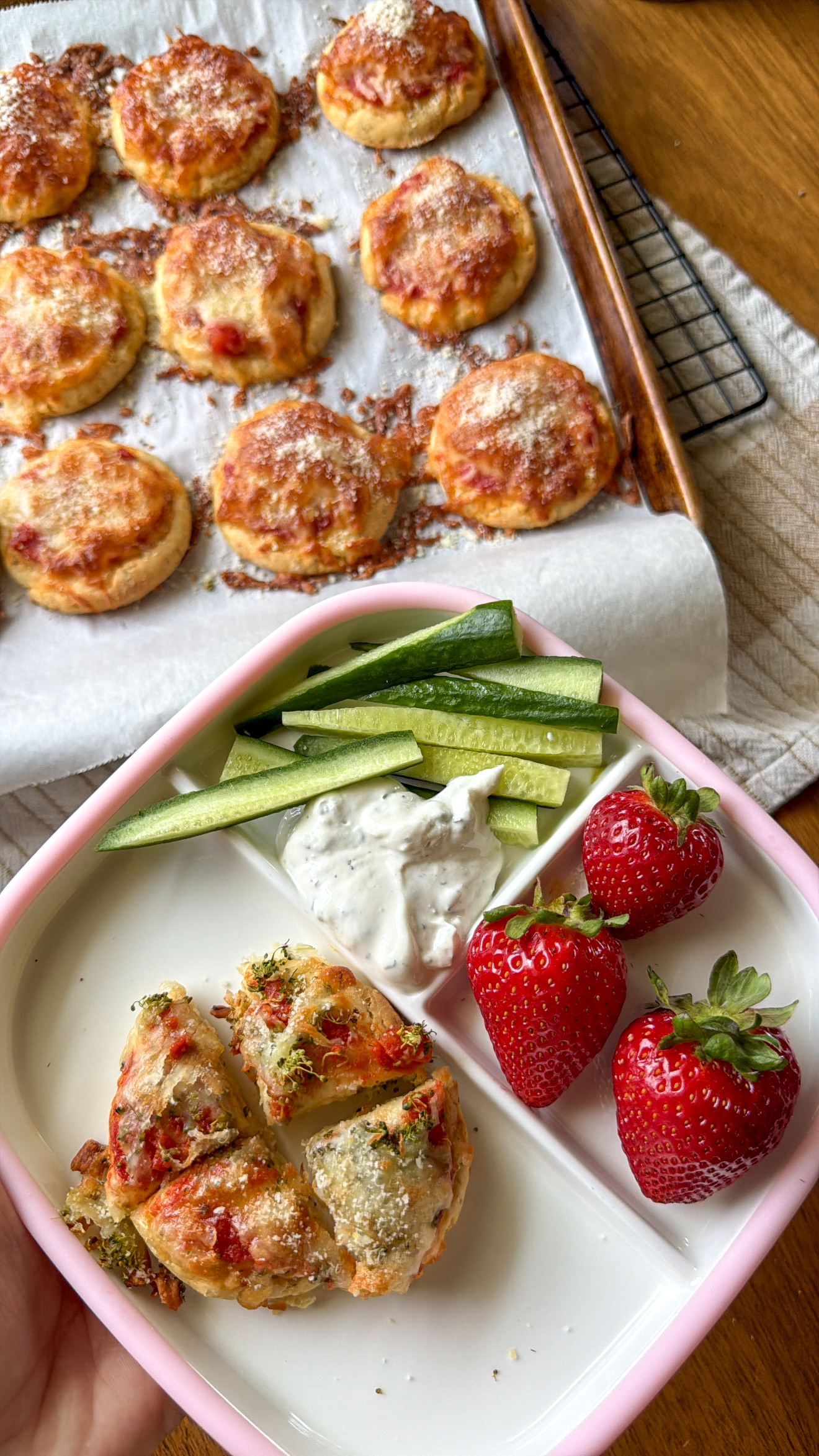
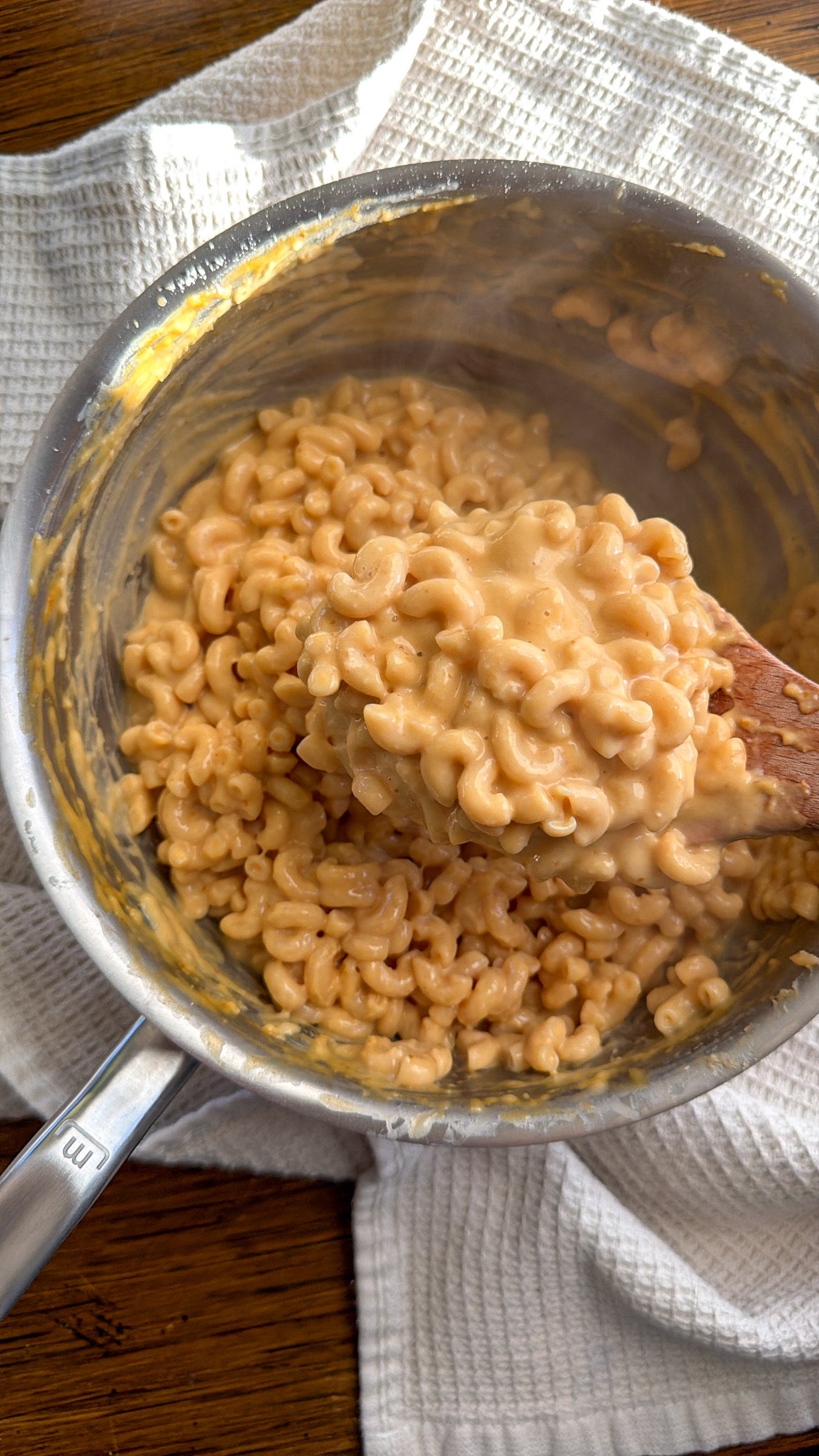
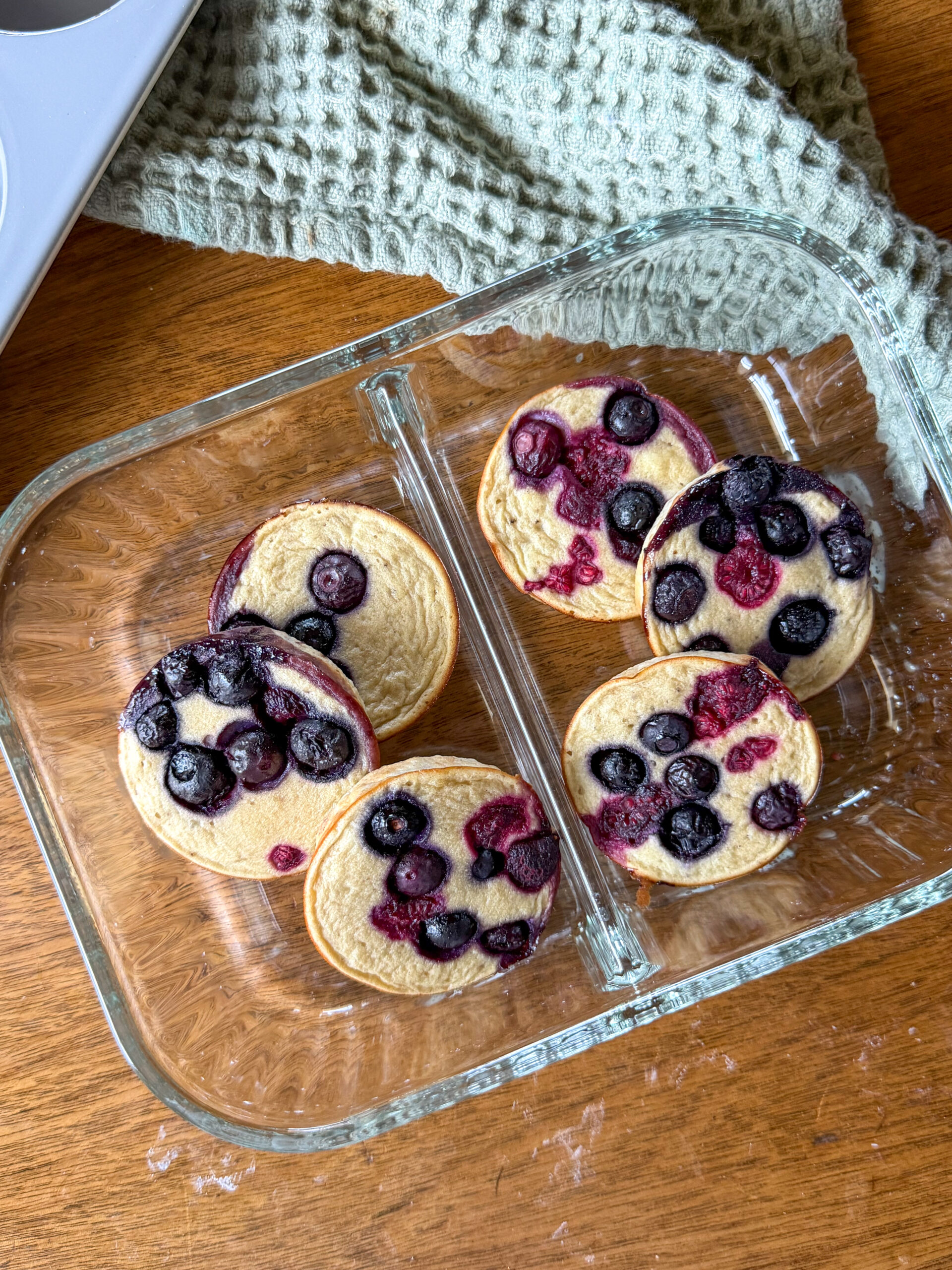
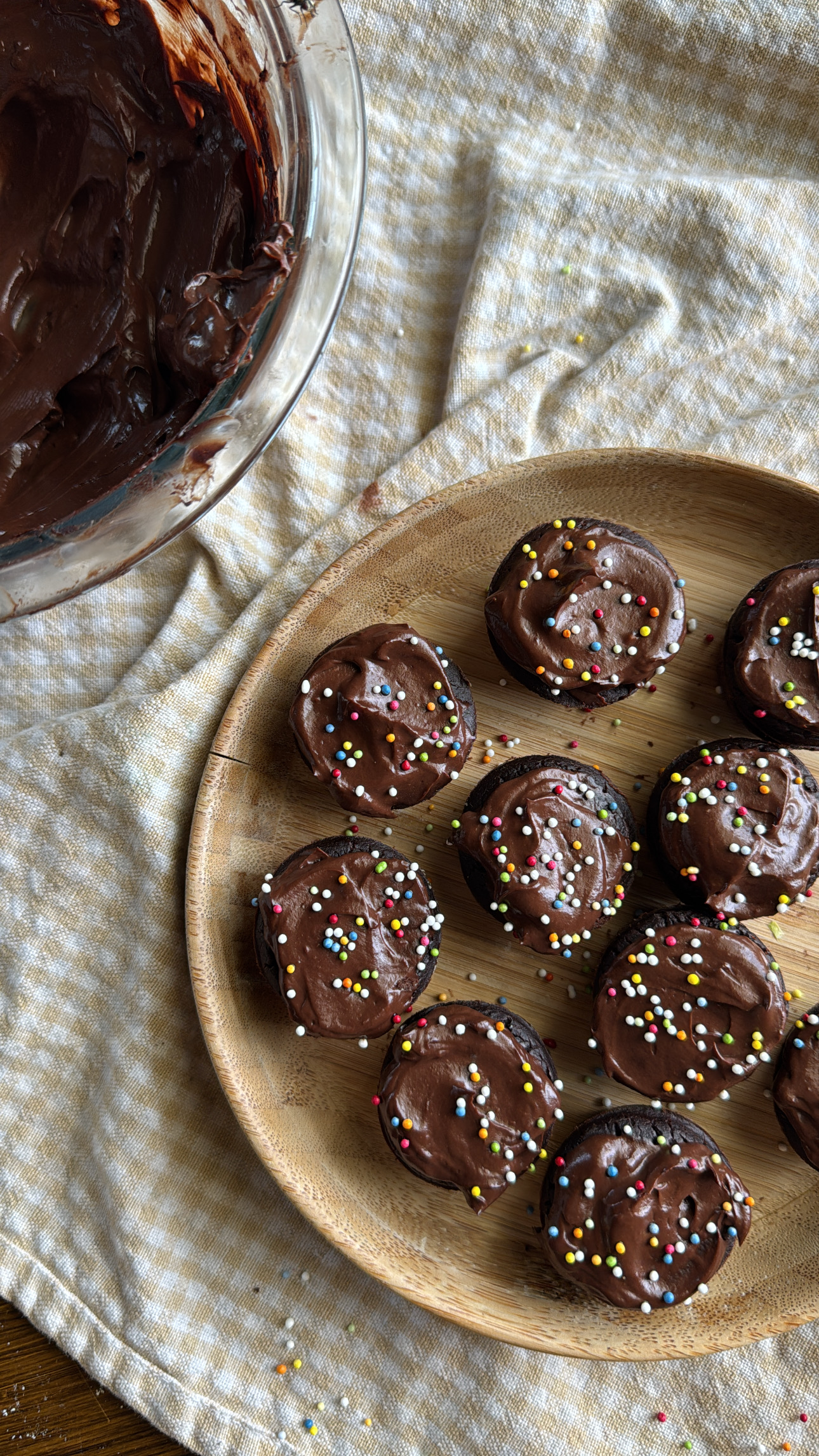
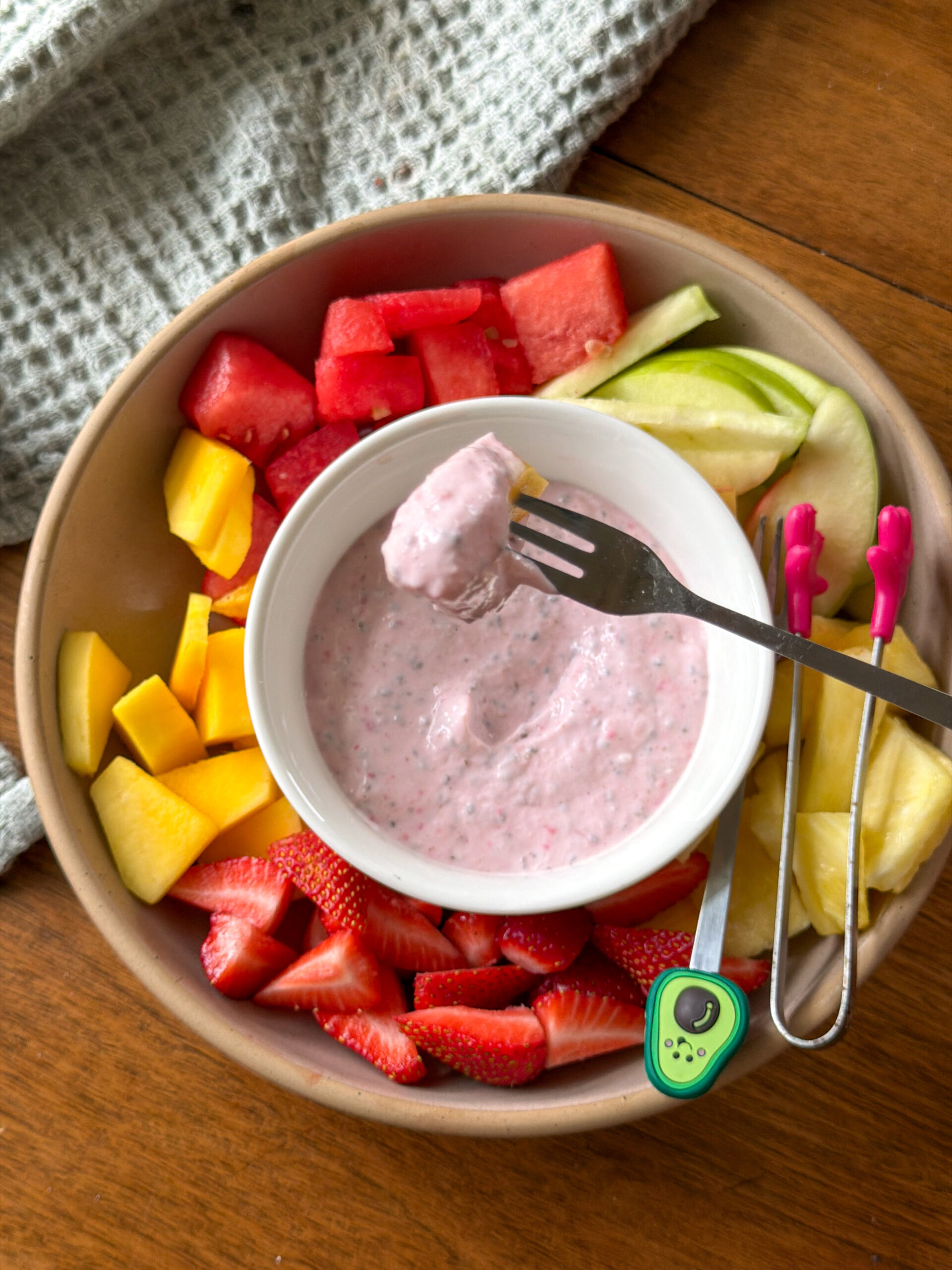
Favorite Nutrient Dense Recipes for Toddlers
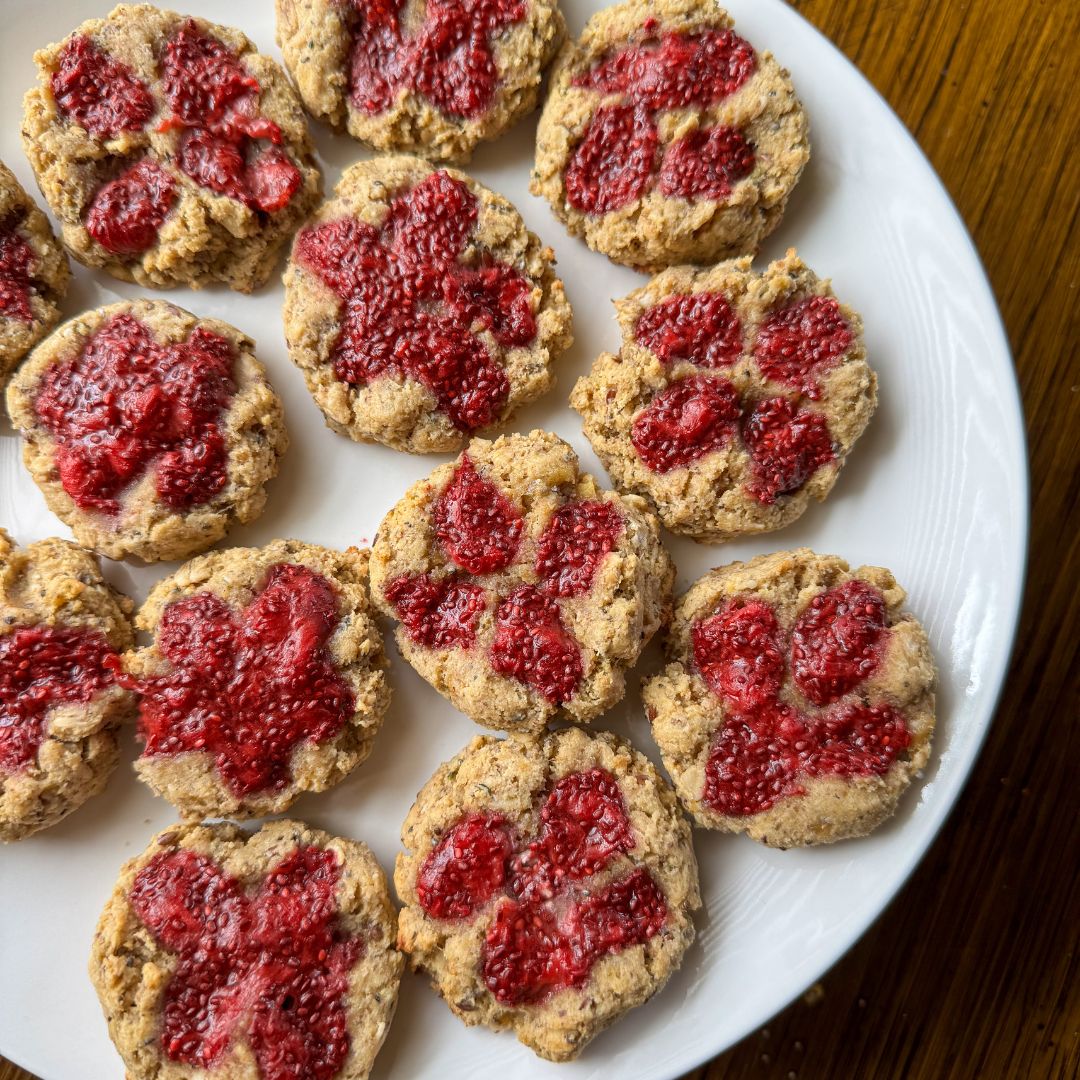
Tiff's Dietitian Tip
Adding calories to your toddler's diet doesn't have to mean forcing new foods or fighting at the table. It means getting strategic with the foods they already love. Making every bite and every sip count. Start with the fat, lean into full-fat dairy, make the smoothie, and take the pressure off. You've got this!
A Word on Pressure - Because It Matters
I know when a pediatrician tells you your toddler needs to gain weight, every meal starts to feel high-stakes. You're watching every bite. You're bribing, negotiating, offering dessert if they just eat three more bites. You're not alone, and you're just being the caring mom that you are!
But here's what the research consistently shows: pressure at the table (any pressure, even gentle pressure) increases food refusal over time. The more we push, the more kids refuse. The Division of Responsibility model (Ellyn Satter, widely supported by the AAP) is clear on this: your job is to decide what's offered, when, and where. Their job is to decide whether and how much to eat.
The strategies in this post work precisely because they don't require your toddler to do anything differently. You're adding calories to food they already eat. No new foods, no pressure, no battles. That's the whole point.
If you found this post on high calorie foods for toddlers helpful, I would love for you to leave a rating or comment if you'd like to see more of these type of posts.
And if you're still feeling stuck on your feeding journey with your toddler or stuck in food ruts, APPLY HERE to chat more with me and get the knowledge + confidence you deserve to help your little one get the nutrition they need!
xoxo, toddler dietitian tiff
your toddler dietitian bestie
Disclaimer: This post is for educational purposes only and should not replace individualized medical advice. Every child develops at their own pace, and safe food choices will depend on your little one’s age, chewing ability, and readiness for textures. Always supervise your baby or toddler during meals and adjust food sizes and textures as needed.
References:
- Kleinman, R. E., & Greer, F. R. (Eds.). (2020). Pediatric nutrition (8th ed.). American Academy of Pediatrics. https://publications.aap.org/aapbooks/book/667/Pediatric-Nutrition
- American Academy of Pediatrics. (2024). Bright Futures: Nutrition. https://brightfutures.aap.org
- U.S. Department of Agriculture & U.S. Department of Health and Human Services. (2020). Dietary Guidelines for Americans, 2020-2025. https://www.dietaryguidelines.gov
- Satter, E. (2000). Child of mine: Feeding with love and good sense. Bull Publishing. https://www.ellynsatterinstitute.org
- Mehta, N. M., Corkins, M. R., Lyman, B., Malone, A., Goday, P. S., Carney, L. N., Monczka, J. L., Plogsted, S. W., & Schwenk, W. F. (2013). Defining pediatric malnutrition: A paradigm shift toward etiology-related definitions. Journal of Parenteral and Enteral Nutrition, 37(4), 460-481. https://pubmed.ncbi.nlm.nih.gov/23528324
- Lynch, S. R., & Cook, J. D. (1980). Interaction of vitamin C and iron. Annals of the New York Academy of Sciences, 355, 32-44. https://pubmed.ncbi.nlm.nih.gov/6940487
- Birch, L. L., & Fisher, J. O. (1998). Development of eating behaviors among children and adolescents. Pediatrics, 101(3 Pt 2), 539-549. https://pubmed.ncbi.nlm.nih.gov/12224660
Leave a Reply